What is Logistics? 
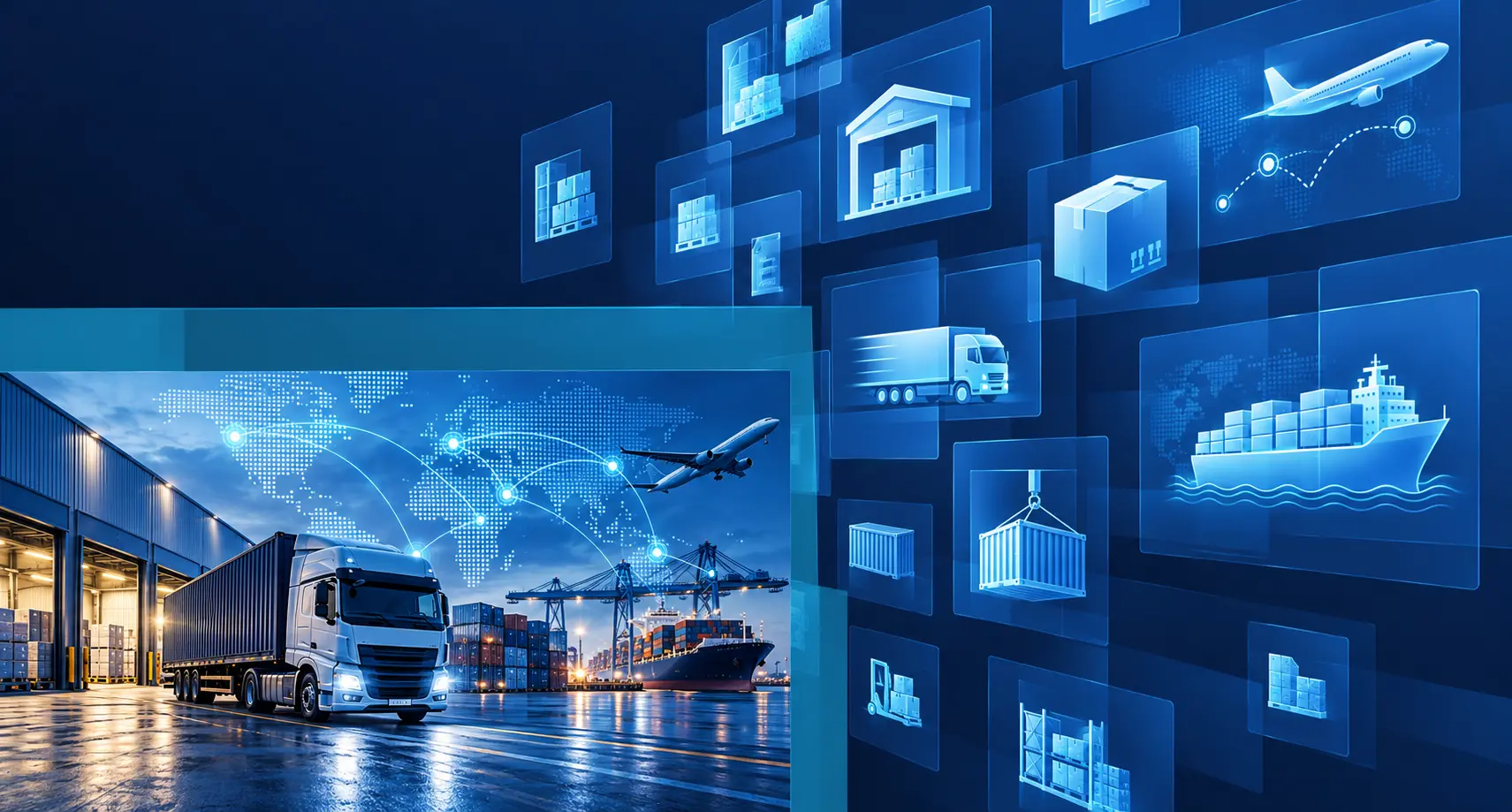
Traditionally, logistics has been defined as the planning, implementation, and control of the flow of goods and services from origin to consumption. Today, logistics has evolved into a digitally driven discipline encompassing not only goods but also the seamless flow of information and capital. PartnerLinQ frames this evolution within the concept of Platform Supply Chains (PSCs), which integrate producers, consumers, and stakeholders through interconnected digital platforms.
Why is Logistics important in the supply chain?
Logistics is more than the movement of goods; it is the lifeblood of global commerce. From raw materials to finished products, logistics ensures that the right items arrive at the right place, at the right time, and at the right cost. Effective logistics management reduces inefficiencies, improves customer satisfaction, and strengthens a company’s competitive edge. In industries such as retail, manufacturing, healthcare, and e-commerce, logistics directly influences revenue and brand loyalty.
What Industry Standards Support Modern Logistics?
Modern logistics depends on globally recognized standards that enable organizations to exchange information consistently across manufacturers, suppliers, logistics providers, carriers, warehouses, and customers. Standards such as ANSI X12, UN/EDIFACT, GS1, SCAC, SSCC, and standardized Bills of Lading provide the common language that powers automation, shipment visibility, inventory synchronization, and digital supply chain collaboration.
GS1 Standards: The Identity Layer of the Supply Chain
GS1 standards such as GTIN, GLN, and SSCC complement logistics by standardizing how shipments are identified across systems and partners. While EDI and APIs define message structure, GS1 standards ensure data consistency and interoperability—enabling accurate execution, faster onboarding, and scalable operations across multi-enterprise supply chain environments.
SSCC — Logistics Identity
Serial Shipping Container Codes (SSCCs) uniquely identify logistics units such as pallets and cartons within shipment workflows. Embedded within shipment data and fulfillment processes, SSCCs enable automated receiving, real-time tracking, and end-to-end traceability—improving warehouse efficiency and reducing errors across high-volume distribution networks.
Standards Related to Logistics
Identifier | Purpose |
GTIN | Product Identification |
GLN | Business Location |
SSCC | Shipment Unit Identification |
SCAC | Carrier Code |
PRO Number | Freight Tracking |
BOL | Transportation Documentation |
NMFC | Freight Classification |
HS Code | International Trade Classification |
What is Logistics Management?
Logistics management is the planning, coordination, execution, and optimization of the movement and storage of goods, information, and resources throughout the supply chain. It encompasses transportation, warehousing, inventory management, order fulfillment, and real-time visibility to ensure products reach customers efficiently and cost-effectively.
What Does a Logistics Company Do?
A logistics company manages the transportation, storage, fulfillment, and distribution of goods on behalf of manufacturers, distributors, retailers, or e-commerce businesses. Depending on the provider, services may include freight management, warehousing, inventory control, customs brokerage, order fulfillment, and supply chain visibility.
What Is Transportation Management?
Transportation management is the planning, execution, optimization, and monitoring of freight movement across carriers and transportation modes. It includes carrier selection, load planning, routing, freight auditing, shipment tracking, and performance analysis to improve delivery reliability while controlling transportation costs.
What are Platform Supply Chains (PSCs)?
Platform Supply Chains (PSCs) represent the modern equivalent of traditional supply chains. They leverage technology to connect participants across the globe, creating whole ecosystems that are flexible, scalable, and transparent. E-commerce giants such as Amazon and Wayfair exemplify the PSC, managing their operations while integrating with third-party sellers and external logistics networks to achieve economies of scale, massive reach and extreme efficiency.
What Is a Control Tower?
A supply chain control tower is a centralized operational platform that provides real-time visibility into orders, inventory, transportation, suppliers, and logistics events across multiple organizations. Control towers help businesses detect disruptions, manage exceptions, and make faster, data-driven decisions using integrated operational information.
Logistics Timeline
The evolution of logistics has taken place through successive waves of physical, informational, and operational standardization, culminating in AI-powered execution.
Physical standardization (pallets, containers)
Identification standardization (barcodes/GS1)
Information standardization (EDI)
Enterprise execution (ERP/WMS/TMS)
Enterprise connectivity (cloud, APIs, multi-enterprise networks)
Business intelligence (AI and automation)
- 1960s → Containerization (NJ)
- 1970s → UPC Barcodes & Product Identification (UPC/GS1)
- 1980s → Electronic Data Interchange (EDI, electronic commerce)
- 1990s → Enterprise execution (ERP, WMS, TMS)
- 2000s → Internet & Global Commerce & Supply Chain Visibility (GS1 Standards)
- 2010s → Cloud Integration, APIs, B2B & Multi-Enterprise Networks
- 2020s → AI, Intelligent Automation, Decision Intelligence
Logistics Architecture
- Suppliers
- ERP / Procurement
- Warehouse Management
- Transportation Management
- Carrier Networks
- Distribution Center
- Retailers / Customers
What is the Role of EDI in Logistics Transformation
Electronic Data Interchange (EDI) has long been the cornerstone of logistics transformation. EDI enables automated, standardized communication between trading partners, eliminating manual errors and reducing delays. Logistics in particular leverages EDI documents including purchase orders, advance ship notices, and invoices to form the backbone of end-to-end visibility. Businesses achieve faster cycle times, real-time updates, and stronger supply chain resilience by embedding EDI into logistics processes, (PartnerLinQ Blog: How EDI in Logistics is Transforming Supply Chain Operations).
What is the difference between X12 EDI and EDIFACT? 
X12 and EDIFACT are both EDI standards that support similar business processes but differ in structure and global usage. X12 uses numeric transaction sets and is dominant in North America, while EDIFACT uses alphanumeric message types and is widely used in international trade and global supply chain environments.
#LearnEDI: What is the difference between ANSI X12 and UN/EDIFACT
What EDI Transactions Are Commonly Used in Logistics?
Logistics organizations commonly exchange EDI 204 Load Tender, EDI 210 Freight Invoice, EDI 214 Shipment Status, EDI 990 Load Tender Response, EDI 940 Warehouse Shipping Order, EDI 945 Warehouse Shipping Advice, EDI 943 Stock Transfer Shipment Advice, and EDI 944 Warehouse Stock Transfer Receipt Advice to automate transportation and warehouse operations.
Upstream EDI Transactions commonly used in Logistics
Business Function | X12 Standard | EDIFACT Standard |
Organizational Alignment | ORGLOG | |
Product & Pricing Synchronization | PRICAT | |
Stock Transfer Shipment Advice | DESADV (context) | |
Advance Ship Notice | ||
Goods Receipt Confirmation | 861 | RECADV |
Quality Test Results | QALITY | |
Stock Transfer Receipt Advice | RECADV | |
Warehouse Inventory Adjustment | INVRPT(context) | |
Inventory Report | INVRPT(context) |
Core EDI Transactions (Execution Anchors) commonly used in Logistics
Business Function | X12 Standard | EDIFACT Standard |
Warehouse Shipping Order | DESADV (context) | |
Truck Load Tender | IFTMIN | |
Carrier Tender Response | IFTMAN | |
Warehouse Shipping Advice | DESADV (context) | |
Truck Shipment Status | IFTSTA | |
Advance Ship Notice | ||
Functional Acknowledgment | CONTRL |
Downstream EDI Transactions commonly used in Logistics
Business Function | X12 Standard | EDIFACT Standard |
Invoice | INVOIC (context) | |
Freight Invoice | INVOIC (context) | |
Payment / Remittance | REMADV |
Complete list of EDI Transactions commonly used in Logistics
Business Function | X12 Standard | EDIFACT Standard |
Organizational Alignment | ORGLOG | |
Product & Pricing Synchronization | PRICAT | |
Stock Transfer Shipment Advice | DESADV (context) | |
Advance Ship Notice | ||
Invoice | INVOIC (context) | |
Goods Receipt Confirmation | 861 | RECADV |
Quality Test Results | QALITY | |
Stock Transfer Receipt Advice | RECADV | |
Warehouse Inventory Adjustment | INVRPT(context) | |
Inventory Report | INVRPT(context) | |
Warehouse Shipping Order | DESADV (context) | |
Warehouse Shipping Advice | DESADV (context) | |
Truck Load Tender | IFTMIN | |
Carrier Tender Response | IFTMAN | |
Truck Shipment Status | IFTSTA | |
Terminal / Port Activity | 322 | CODECO / COARRI |
Ocean Shipment Status | 315 | IFTSTA |
Freight Invoice | INVOIC (context) | |
Payment / Remittance | REMADV | |
Functional Acknowledgment | CONTRL | |
Application Error Notification | 824 | APERAK |
What is the Difference Between Logistics and Supply Chain Management?
Logistics focuses on moving, storing, and delivering goods efficiently. Supply chain management is broader, coordinating sourcing, manufacturing, procurement, logistics, inventory, suppliers, customers, and business planning. Logistics is one component of an end-to-end supply chain strategy.
What is a Logistics Service Sharing (LSS)?
Logistics Service Sharing (LSS) is a term used here to describe a collaborative logistics operating model in which organizations share transportation, warehousing, fulfillment infrastructure, or technology platforms to improve efficiency and reduce costs. Although not a formal logistics classification like 3PL or 4PL, the underlying collaborative practices are widely used across modern supply chains.
Largely theoretical, an LSS strategy enhances efficiencies by leveraging shared capabilities, allowing participants to benefit from economies of scale, leading to improvement in service levels while minimizing waste and redundancies.
Do Logistics Sharing Services exist today?
While "Logistics Sharing Services (LSS)" is not a formally recognized logistics classification in the way that 1PL, 2PL, 3PL, 4PL, and 5PL are they do persist among functioning operating models. They include shared fulfillment like Amazon’s marketplace and rate-sharing platforms offered by carriers like FedEx and UPS.
Wayfair also demonstrate aspects of an LSS within their operations. They leverage a small, curated network of partners – something of a hybrid between and operating model and collaborative strategy the program operates by invitation-only and exists to ensure Wayfair works with suppliers who meet very strict quality and logistical standards, perhaps a prequel to what an LSS will become – we’ll have to wait a few years and see how it works out and if the ideas catch on.
Collaborative approaches made possible by Amazon, FedEx, UPS, Wayfair, and others demonstrate a growing trend toward sustainable logistics, where shared assets minimize waste and environmental impact while optimizing profit.
What is Self-built logistics (SBL)?
Self-built logistics (SBL) refers to the practice of a firm creating and operating its own logistics operation, including warehousing, transportation, distribution, and systems. While operational costs may be higher than other logistics methods mentioned below, self-built logistics allows companies to have the greatest flexibility and control over their logistics operations, ensuring fast and efficient delivery.
What Are the Different Types of Logistics Providers?
Logistics providers have evolved well beyond the familiar third-party logistics (3PL) model. Today, organizations can choose from several logistics service models, each offering a different level of operational responsibility, technology integration, and strategic oversight—from self-managed logistics (1PL) to emerging AI-driven logistics ecosystems (6PL).
1PL: Self-managed logistics using internal fleets and warehouses.
2PL: Outsourced transportation or warehousing providers.
3PL: Comprehensive third-party providers handling storage, fulfillment, and distribution.
4PL: Integrators managing multiple 3PLs with a strategic, consultative approach.
5PL: Technology-driven providers orchestrating complex e-commerce and global supply chains.
6PL: Emerging theoretical model leveraging AI, IoT, and predictive analytics to fully automate supply chain orchestration.
Third-party logistics (3PL) offers outsourced logistics services like warehousing, distribution, and inventory management, such companies may receive purchase orders or may receive warehouse shipment orders from their clients, process and ship the orders on behalf of their clients.
Fourth-party logistics (4PL) manage the entire logistics process, integrating and overseeing multiple 3PLs on behalf of a company. A 4PL will include all the benefits of 3PL providers but also include things such as Project management, sourcing and negotiation, Logistics strategy and analytics, Impartial service advice, and will serve as a single point of contact for the shipper (client/product owner).
Fifth-party logistics (5PL) adds yet another layer of complexity to the Third and Fourth-party logistics (3PL,4PL) logistics story by incorporating a heavy use of technology and by managing increasingly complex sometimes global supply chain networks. Often catering to online businesses. 5PLs play a significant role in the age of Industry 4.0, particularly in complex, large-scale e-commerce environments (Amazon, Wayfair, TEMU, Shein, AliExpress, Wish, and TikTok Shop.) 5PLs extend the scale of 4PLs by managing an entire supply chain with an emphasis on advanced technologies like automation and data analytics. 5PLs often include e-commerce and leverage advanced technologies, logistics networks, planning applications, and multiple modes of transportation all managed through digital platforms and systems mostly of their creation. Some would argue that Fifth-party logistics Providers (5PL) are themselves organized as technology companies and not organized as logistics companies at all, and as a result of their technology investments, often handle vast, complex supply chains that focus heavily on optimizing processes through technology integration.
Sixth-party logistics (6PL) mostly theoretical Sixth-party logistics (6PL) are an advanced model of logistics management that goes beyond traditional logistics to include high-level strategic and technology oversight, providing fully integrated and automated supply chain solutions monitored perhaps driven by modern technologies like artificial intelligence. While key tenants and concepts of 6PL are mostly theoretical today with a few explorers beginning to become active in this area of logistics, 6PLs take logistics to the next level by incorporating advanced technologies such as artificial intelligence (AI), machine learning, IoT (Internet of Things), Electronic Logging Devices (ELD), SMS, and big data analytics to optimize and automate supply chains at a strategic level managing highly complex, global supply chains leveraging predictive analytics to enhance decision-making and efficiencies.
What are some of the more common Logistics Standards?
Standard | Purpose |
ANSI X12 | North American EDI |
UN/EDIFACT | Global EDI |
GS1 | Product identification and barcodes |
SSCC | Shipment identification |
SCAC | Carrier identification |
PRO Number | Freight shipment tracking |
Bill of Lading | Transportation documentation |
What Are the Main Types of Logistics?
Logistics is commonly divided into inbound logistics, outbound logistics, reverse logistics, transportation logistics, warehouse logistics, production logistics, procurement logistics, and last-mile delivery. Each focuses on a different stage of moving products from suppliers to customers and, when necessary, back again.
What is Inbound Logistics?
Inbound logistics manages the movement of raw materials, components, and supplies from vendors to manufacturers, warehouses, or distribution centers. Activities include purchasing coordination, transportation, receiving, inventory management, and supplier scheduling.
What is Outbound Logistics?
Outbound logistics manages the storage, fulfillment, shipping, and delivery of finished products from manufacturers or warehouses to distributors, retailers, or customers. It includes order processing, packing, transportation, and last-mile delivery.
What is Reverse Logistics?
Reverse logistics manages products moving from customers back to manufacturers, retailers, or recycling facilities (returns). Common activities include product returns, repairs, refurbishment, recalls, warranty processing, recycling, and responsible disposal.
What is the Strategic Value of Logistics?
An optimized logistics network not only improves cost efficiency but also enables market expansion. Companies with advanced logistics capabilities can adapt faster to disruption, offer shorter lead times, and deliver superior customer experiences. Logistics, once considered a back-office function has turned the corner into a revenue enabler, a product and/or service differentiator in an increasingly digital, complex, and ever changing marketplace.
What are the Benefits of Modern Logistics?
Modern logistics improves customer service, reduces transportation costs, shortens delivery times, increases inventory accuracy, strengthens supplier collaboration, enhances operational visibility, improves regulatory compliance, and enables organizations to respond more quickly to market changes.
How is AI Changing Logistics?
Artificial intelligence helps logistics organizations predict demand, optimize transportation routes, automate warehouse operations, detect supply chain disruptions, improve inventory planning, and generate operational recommendations using real-time business data and predictive analytics.
Does AI depend on standardized data?
AI is most effective when built upon standardized business information exchanged through industry standards such as ANSI X12, UN/EDIFACT, GS1 identifiers, and modern APIs. A standards-first model transforms diverse partner ecosystems into a unified execution framework, allowing each participant to operate within their preferred standard while maintaining semantic consistency across the network.
#PartnerLinQInsight
Standards First Approach: A Strategic Whitepaper
What does the future of Logistics look like - with AI?
The next wave of logistics is one powered or enhanced by artificial intelligence and it references not only AI but machine learning, predictive analytics, and autonomy. Technologies including autonomous vehicles, drones, and smart warehouses are already shipping, already shaping how goods moves from field to factory to consumer
Is Logistics automation a competitive advantage?
Yes, logistics has evolved from a functional necessity to a strategic asset. Logistics monetization in today’s connected economy means that logistics does more than play a role it defines how companies serve their customers, perform, grow, and compete. Organizations that embrace digital logistics platforms, integrated EDI solutions, and decision-driven intelligence are better positioned to thrive in such `a dynamic and competitive marketplace.
Logistics is no longer about moving boxes — logistics is about moving business.
References
Related Resources

Explore Our Integration Solutions

PartnerLinQ Integration Solutions
Connect Everything. Integrate Intelligently.
Future-Proof Your Business with Composable, AI Powered Connectivity.