
Introduction
Electronic Data Interchange (EDI) plays a critical role in modern supply chains by enabling the automated, structured exchange of business documents between trading partners. This paper is about two globally recognized standards — ANSI X12 and UN/EDIFACT — these form the backbone of
B2B interoperability or Electronic Data Interchange (EDI)
This expanded comparison highlights the distinctions and commonalities between the between ANSI X12 and EDIFACT standards. Both standards play a role across the global supply chain and go a long way in ensuring trust and efficiency in electronic data interchange (EDI).
What is the difference between ANSI X12 and EDIFACT?
ANSI X12 and EDIFACT differ in structure, syntax, and global usage. X12 uses numeric transaction sets and is dominant in North America, while EDIFACT uses alphanumeric message types and supports international trade. Both standards enable the same business processes but operate in different regional ecosystems.
ANSI X12 and EDIFACT Comparison Table
| Category | ANSI X12 | EDIFACT |
|---|---|---|
| Region | North America | Global |
| Message Format | Numeric (850, 855) | Alphanumeric (ORDERS, DESADV) |
| Structure | Positional | Qualifier-driven |
| Envelopes | ISA/GS | UNB/UNH |
| Separators | *, ~ | +, ' |
| Governance | ASC X12 | United Nations |
What are the Key Differences between ANSI X12 and EDIFACT?
While both standards support similar business functions and transaction lifecycles, they differ in function, structure, syntax, and operational nuance, and governance.
Which is better: X12 or EDIFACT?
Neither X12 nor EDIFACT is universally better—the choice depends on trading partner requirements and geography. X12 is preferred in North America, especially for retail and healthcare, while EDIFACT is dominant in global trade, logistics, and regulated international environments.
When to Use Which - ANSI X12 vs EDIFACT?
While  both standards are universal in their use, both are widely specified and both are accepted, there are observational consideration for companies first entering the EDI space or considering EDI for the first or second time.
Consider ANSI X12 for use when:
- Primary trading is with U.S./North American retailers, manufacturers, logistics service providers (LSPs), and third-party warehouse operators (3PLs)
- Supporting U.S. healthcare and HIPAA mandates
Consider EDIFACT for use when:
- Operating in Europe (EU), Latin America (LATAM), or the Asia Pacific region (APAC)
- Primary trade operations are with Large Multinationals - Automotive OEMs, Global Logistics providers, airlines, and ports.
- There is a need to comply with global customs or regulated supply chains.
What are the functional differences between ANSI X12 and EDIFACT?
While  ANSI X12 and EDIFACT standards are similar and comparisons charts number in the hundreds, ANSI X12, the North American standard, uses a three-digit codes (850, 855, 860) EDIFACT is the international standard, using six-character codes (ORDERS, ORDRSP, ORDCHG). Then comes the difference in line terminators and segment separators like tilde (\(~\)) and asterisk (\(*\)) in X12 and then the plus (\(+\)) and the colon (\(:\))in EDIFACT. Both uses are universally accepted and widely supported with requirements typically dependent on their trading partner and yes - location, location, location.
What is the structural difference between X12 and EDIFACT?
X12 uses a positional structure with fixed segment definitions and envelope segments like ISA and GS. EDIFACT uses a hierarchical, qualifier-driven structure with envelopes such as UNB and UNH, enabling greater flexibility for global data representation.
What Syntax & Structure differences exist between ANSI X12 and EDIFACT?
- X12 uses `ISA/GS` envelopes; EDIFACT uses `UNB/UNH` structures.
- X12 uses segment terminators like `~` and `*`; EDIFACT uses `’` and `+`
- EDIFACT uses structured qualifier‑driven data; X12 relies more on positional rules.
- X12 adoption is U.S./North America‑centered; EDIFACT is globally dominant.
| Aspect | ANSI X12 | EDIFACT |
|---|---|---|
| Separators | * (element separator), ~ (segment terminator) | + (element separator), ' (segment terminator) |
| Segment Example | N1*ST*Company Name*92*12345~ | NAD+ST+12345::92+Company Name' |
| Envelope Segments | ISA/GS/GE/IEA | UNB/UNH/UNG/UNE/UNT |
| Key Characteristic | Positional data elements; fixed segment lengths | Extensive, globally standardized code lists |
What are the operational differences between ANSI X12 and EDIFACT? 
Organizations need assurance, operationally speaking ANSI X12 and EDIFACT standards are quite similar providing for the precise exchange of transaction documents and with similar precision to ensure transaction documents are structurally sound. The receiving partner in the exchange must not only confirm delivery but also validate the structure and syntax of the message. This is where the Functional Acknowledgement (commonly known as FA or 997 in ANSI X12 EDI standards) plays its role and while ANSI X12: uses the 997 to report at the functional group level, EDIFACT uses the CONTRL document for acknowledgments and similar to the X12 997 the CONTRL document is used for confirming successful message processing. Both transactions provide assurance, offer transparency, and build trust across trading partner relationships.
What is the difference between ANSI X12 and EDIFACT CONTROL?
The X12 997 and EDIFACT CONTRL messages both confirm receipt and validate syntax of EDI documents. The 997 is used in X12 environments to acknowledge functional groups, while CONTRL performs the same role in EDIFACT systems, supporting global message validation and error reporting.
| Aspect | ANSI X12 | EDIFACT |
|---|---|---|
| Standard | ANSI X12 Transaction Set 997 | UN/EDIFACT CONTRL message |
| Definition | Confirms receipt and validates syntax of an X12 document. | Acknowledges EDIFACT documents and confirms syntax compliance. |
| Purpose | Provides feedback on structural correctness, acceptance, or rejection of EDI documents. | Reports on whether EDIFACT documents conform to syntax standards. |
| Workflow Role | Returned by the receiver after checking message syntax; may indicate acceptance or rejection. | Generated by EDIFACT systems to acknowledge or reject messages based on syntax validation. |
| Key Benefits | - Early error detection - Audit trail for compliance - Supports operational resilience - Ensures clarity of syntax acceptance | - Global syntax standardization - Structured error reporting - Supports cross-border trade - Enhances trust in global EDI |
| Supply Chain Example | A distributor sends a PO to a manufacturer; the manufacturer returns a 997 confirming syntax validity or noting rejection. | An automotive OEM sends forecasts; a supplier returns a CONTRL if syntax errors are detected, preventing downstream disruption. |
| PartnerLinQ Perspective | 997s embody best practice in EDI by ensuring onboarding transparency and error detection, as emphasized by PartnerLinQ blogs. | CONTRL supports global partner onboarding and reduces ambiguity in international supply chain communication, aligning with PartnerLinQ’s emphasis on clarity and reliability. |
Are there Business Impact considerations for choosing ANSI X12 or EDIFACT?
Trading  partner requirements drive much of the decision process for selecting ANSI X12 or EDIFACT . Partners will specify which standard they require or prefer with the partner relationship serving as the primary key to the decisions undertaken during the onboarding cycle. If the business relationship serves as a primary key to which standards are implemented and how, then EDI specification documents serve as the secondary key, and one could argue a critical influencer.EDI Specification Documents Control costs, assist in developing and meeting requirements, support business and advance the EDI practice. Customized EDI specification documents are available through PartnerLinQ Support, please contact PartnerLinQ Support at: pl.supportteam@partnerlinq.com
| Consideration | ANSI X12 | EDIFACT |
|---|---|---|
| Cross-Border Efficiency | Limited | Strong global interoperability |
| Automotive Supply Chain | Used in North America with North America OEMs - VDA & Odette variations are also in market | Dominant in global automotive OEM markets |
| Regulated Industries | Healthcare (HIPAA) | International customs/trade, pharma, global logistics |
Are there implementation or flexibility considerations for choosing ANSI X12 or EDIFACT?
While both ANSI X12 or EDIFACT standards are flexible, the age and depth of the code lists used within each of the standards is a good indicator of how flexible they can be in an EDI practice . Flexibility comes down to the use of language; every business, every industry, has its own language. Language plus industry groups over the course of years gives us the codes lists used in ANSI X12”…beginning in 1979. North American centric, X12 code lists were reviewed by the United Nations for use in a “single international standard” (1987). The result of the international effort, EDIFACT codes list, while harmonized even universal, can be more rigid in use. Nuances that exist among industry languages lost to the universality of EDIFACT.
History Timeline
1977
VDA flat-file automotive messages introduced
↓
1979
ANSI X12 established
↓
1982
AIAG founded
↓
1984
Odette founded
↓
1987
UN adopts EDIFACT
↓
1990s
VDA, Odette, and EDIFACT coexist in automotive supply chains
↓
1996
HIPAA designates X12 for claims eligibility & remittance
↓
2000
Global ERP expansion
↓
2012
HIPAA Version 5010 mandatory
↓
2026
HIPAA adopts X12 Healthcare Claim Attachments (275 & 277)
↓
TODAY
Multi-standard integration
The takeaway in terms of implementation is to remain flexible during the implementation process. EDI implementation begins and ends with transformation, also known as ‘translation,’ transformation is the process of converting one data carrier (a document or transaction) into something that can be consumed.
Considering the implementation goal of and the transformation process, deliberating specific codes between partners can be avoided, increasing the rate of success. ANSI X12 and EDIFACT code lists carry more than one code to describe a single action, activity, state, process, or reason. Duplication and transformation largely eliminate the need to debate codes among partners.
| Aspect | ANSI X12 | EDIFACT |
|---|---|---|
| Flexibility | High flexibility — usage varies by trading partner | More rigid — globally harmonized qualifiers |
| Complexity | Easier for U.S. trading ecosystems | Broader qualifier sets require deeper mapping |
| Typical Governance | Industry groups & retailer-driven guidelines | UN-centered governance with regional industry groups |
Why do ANSI X12 and EDIFACT both still exist?
ANSI X12 and EDIFACT continue to coexist because regional industries adopted different EDI standards long before global commerce became commonplace. North American organizations standardized on ANSI X12, while international markets adopted EDIFACT through the United Nations. Modern integration platforms typically support both standards simultaneously.
What versions of ANSI X12 and EDIFACT are commonly used?
ANSI X12 is published in versioned releases such as 4010, 4030, 5010, 6010, and later updates, although many industries continue using older versions for compatibility. EDIFACT versions are identified by directory releases such as D96A, D01B, D03A, D07A, D96B, and newer directories published by UNECE.
Will APIs replace ANSI X12 and EDIFACT?
APIs are expanding real-time connectivity, but they are not replacing ANSI X12 or EDIFACT across enterprise supply chains. Most organizations operate hybrid integration environments where APIs complement established EDI standards. High-volume B2B transactions continue to rely on standardized EDI for reliability, governance, and partner interoperability.
Is there a Document Lifecycle comparison of ANSI X12 vs. EDIFACT?
Both ANSI X12 and EDIFACT standards follow a similar, consistent pattern for processing business: purchase order initiation, supplier acceptance, shipment communication, and financial settlement. PartnerLinQ supports these flows natively, providing unified connectivity, automated mapping, and exception intelligence across regions. Below is a visual representation of comparable document flows across the order‑to‑cash lifecycle.
Side-by-side transaction mapping
| Business Function | X12 Standard | EDIFACT Standard |
|---|---|---|
| Inventory Report | 846 | INVRPT |
| Forecast | 830 | DELFOR |
| Purchase Order | 850 | ORDERS |
| Purchase Order Acknowledgment | 855 | ORDRSP |
| Order Change | 860 | ORDCHG |
| Delivery Schedule | 862 | DELJIT |
| Warehouse Shipping Order | 940 | DESADV (context) |
| Warehouse Shipping Advice | 945 | DESADV (context) |
| Advance Ship Notice | 856 | DESADV |
| Truck Load Tender | 204 | IFTMIN |
| Carrier Tender Response | 990 | IFTMAN |
| Truck Shipment Status | 214 | IFTSTA |
| Invoice | 810 | INVOIC (context) |
| Goods Receipt Confirmation | 861 | RECADV |
| Freight Invoice | 210 | INVOIC (context) |
| Payment / Remittance | 820 | REMADV |
| Functional Acknowledgment | 997 / 999 | CONTRL |
| Application Error Notification | 824 | APERAK |
Are there Governance, Geography and Adoption differences between ANSI X12 and EDIFACT?
ANSI X12 was created for use in North America beginning in 1979, while EDIFACT was developed by the United Nations as a single international standard beginning in 1987, IN terms of selecting one or the other, if the ecosystem is primarily U.S.-based, X12 is the dominant standard. Global supply chains and cross-border operations typically rely on EDIFACT.
Regionality
| Aspect | ANSI X12 | EDIFACT |
|---|---|---|
| Primary Regions | North America (U.S., Canada, Mexico) | Europe, Asia, Middle East, Africa, Global |
| Governing Body | Accredited Standards Committee (ASC) X12 | United Nations / UNECE |
Industry Adoption
| Aspect | ANSI X12 | EDIFACT |
|---|---|---|
| Industry Usage | Retail, Grocery, CPG, Logistics, Manufacturing, Healthcare, Automotive | Global Retail, Logistics, Automotive, Pharma, Government, International Trade |
Industry Adoption Map
| Industry | Preferred Standard |
|---|---|
| Healthcare | X12 |
| Retail US | X12 |
| European Retail | EDIFACT |
| Automotive Global | EDIFACT |
| Automotive North America | X12 + VDA/Odette |
| Ocean Shipping | EDIFACT |
| Airlines | EDIFACT |
| Government | EDIFACT |
What is an EDI implementation guide?
An EDI implementation guide defines how a trading partner expects an ANSI X12 or EDIFACT document to be used. It specifies mandatory segments, optional fields, qualifiers, validation rules, and business requirements beyond the base standard, ensuring consistent processing between trading partners.
Why do trading partner implementation guides matter?
ANSI X12 and EDIFACT define the standard structure of an EDI document, but each trading partner typically publishes implementation guidelines specifying required segments, qualifiers, business rules, and validation requirements. Successful EDI implementations follow both the standard and the partner-specific specification.
Is there value to multi-standard enablement?
Yes, and while PartnerLinQ enables multi-standard EDI orchestration, multi-standard enablement is not for everyone. Ensuring trading partners, carriers, freight forwarders, ports, and brokers operate cohesively is the obvious key to a successful implementation. Whether X12 or EDIFACT or environment is necessary is dependent on the structured exchange of business documents between trading partners which could be about anything, given the circumstances.
| Benefit | ANSI X12 & EDIFACT |
|---|---|
| Unified Interface | Model once, deploy globally |
| Seamless Conversion | X12 ↔ EDIFACT mapping accelerators |
| Global Control Tower | Visibility across mixed document ecosystems |
| ERP & WMS Ready | SAP, Oracle, Dynamics, Manhattan, Blue Yonder |
| Rules + ML-Based Exception Handling | Reduces manual intervention across regions |
PatnerLinQ Enablement
PartnerLinQ provides seamless interoperability across ANSI X12, EDIFACT, and multi-standard ecosystems through a unified digital connectivity platform. Organizations operating multi‑standard partner networks benefit from:
Unified partner onboarding and testing.
Cross‑standard message orchestration and error handling.
Library‑based X12 ↔ EDIFACT mapping accelerators.
Visibility across mixed regional and global flows.
ML‑enabled exception management and transaction intelligence.
WHEN SHOULD YOU USE x12 vs EDIFACT?
Use X12 when trading within North America or supporting industries like healthcare and retail that mandate it. Use EDIFACT when operating internationally, especially in logistics, automotive, and regulated cross-border environments where global standardization is required.
Which standard should I use?
Are your partners mostly in North America?
↓
YES → X12
NO
↓
Are your partners international?
YES → EDIFACT
NO
↓
Are your partners mixed
(North America & International)?
YES → Support Both
Conclusion: What do todays markets look like for ANSI X12 and EDIFACT?
Today, markets are global, supply chain networks span continents, companies increasingly interact with partners from across the world and across multiple standards. While multi-standard enablement is not a one size fits all solution for every implementation, understanding the environment, is. PartnerLinQ uniquely supports X12, EDIFACT, and hybrid environments, enabling enterprise‑grade scalability, interoperability, and real‑time operational visibility.
People Also Ask 
How Many EDI standards Exist?
The most widely used EDI standards are ANSI X12 and EDIFACT, but others include VDA (automotive), TRADACOMS (UK retail), and industry-specific subsets. Most global supply chains rely on a combination of standards depending on geography and trading partner requirements.
What is ANSI X12?
ANSI X12 is a North American EDI standard used to exchange structured business documents such as purchase orders, invoices, and shipment notices. It uses numeric transaction codes (e.g., 850, 810) and positional formatting, and is widely adopted across retail, healthcare, manufacturing, and logistics industries.
What is EDIFACT?
EDIFACT (Electronic Data Interchange for Administration, Commerce, and Transport) is a global EDI standard developed by the United Nations. It uses alphanumeric message types (e.g., ORDERS, INVOIC) and qualifier-driven syntax, enabling standardized data exchange across international supply chains, logistics networks, and regulated trade environments.
What is the difference between X12 and  EDIFACT?
ANSI X12 and EDIFACT serve the same purpose but differ in structure, syntax, and geography. X12 uses numeric transaction codes and is dominant in North America, while EDIFACT uses alphanumeric message types and is used globally. X12 relies on positional formatting, whereas EDIFACT uses qualifier-driven data structures.
Which is more widely used globally?
EDIFACT is more widely used globally, especially across Europe, Asia-Pacific, and international trade networks. ANSI X12 dominates North America, particularly in U.S.-based industries such as retail, healthcare, and logistics. Global organizations often support both standards to operate across regional and international supply chains.
Which industries use X12?
ANSI X12 is widely used in North American industries including retail, grocery, healthcare (HIPAA), manufacturing, logistics, and automotive. It supports high-volume, standardized transactions between trading partners such as retailers, suppliers, carriers, and third-party logistics providers.
Which industries use EDIFACT? 
EDIFACT is commonly used in global industries such as international logistics, automotive manufacturing, retail, pharmaceuticals, and government trade. It is especially prevalent in cross-border supply chains, customs compliance, and multinational trading environments requiring standardized global communication.
What are X12 transaction codes?
X12 transaction codes are three-digit identifiers that define specific business documents within the ANSI X12 standard. Examples include 850 (Purchase Order), 855 (Order Acknowledgment), 856 (Advance Ship Notice), and 810 (Invoice), each representing a step in the order-to-cash lifecycle.
What are EDIFACT message types?
EDIFACT message types are six-character alphanumeric codes that define business documents within the EDIFACT standard. Examples include ORDERS (Purchase Order), ORDRSP (Order Response), DESADV (Dispatch Advice), and INVOIC (Invoice), supporting global transaction workflows.
What is ISA vs UNB? 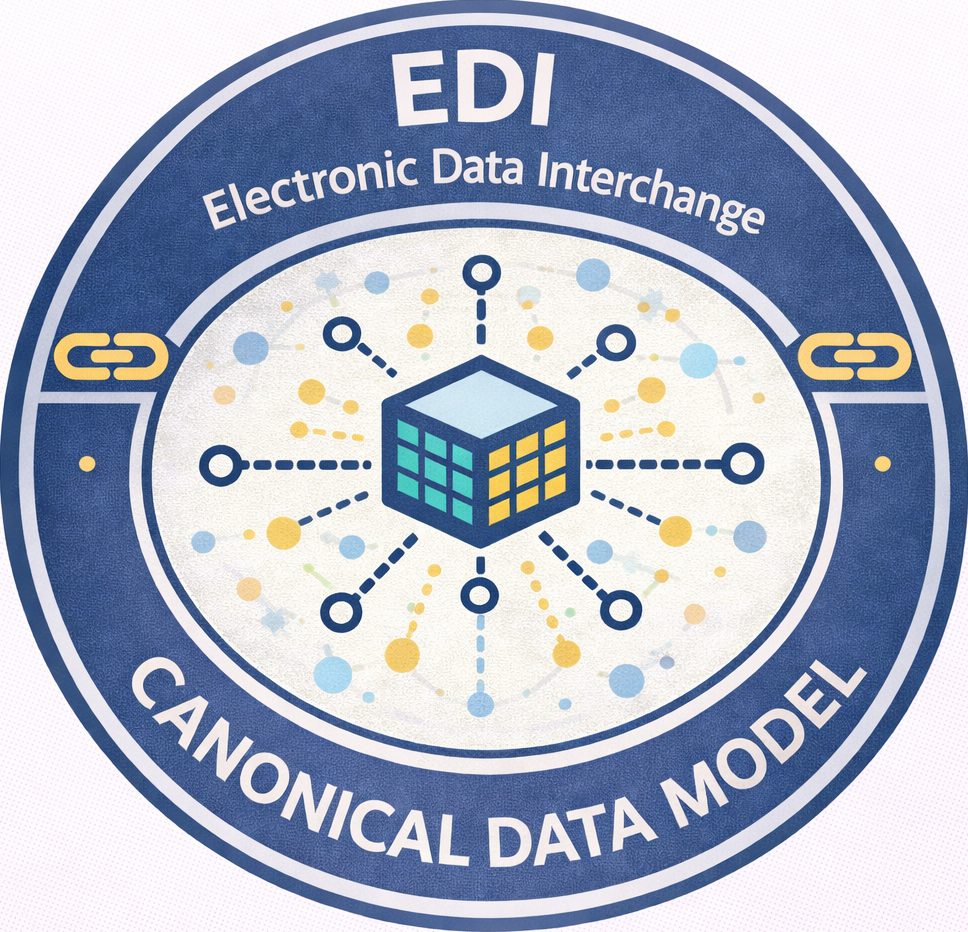
ISA and UNB are envelope segments used to structure EDI messages. ISA is part of the ANSI X12 standard and defines sender, receiver, and control information. UNB serves the same purpose in EDIFACT, providing message routing and identification for international EDI exchanges.
What is 997 vs CONTRL?
The X12 997 and EDIFACT CONTRL messages are functional acknowledgments used to confirm receipt and validate syntax of EDI documents. The 997 is used in X12 environments, while CONTRL serves the same purpose in EDIFACT, ensuring message integrity and supporting error reporting.
Can X12 and EDIFACT be converted?
Yes, ANSI X12 and EDIFACT can be converted using EDI translation and mapping technologies. Organizations typically use a canonical data model to transform one standard into another, enabling interoperability across trading partners. Platforms like PartnerLinQ provide X12 ↔ EDIFACT mapping accelerators to support seamless cross-standard communication.
Is mapping between ANSI X12 and EDIFACT difficult?
Mapping between ANSI X12 and EDIFACT is usually straightforward for common business documents such as purchase orders and invoices, but differences in qualifiers, code lists, optional segments, and trading partner implementation guidelines require transformation logic. Modern EDI platforms automate much of this complexity through reusable mappings and canonical and semantic data models.
Learn More: https://www.partnerlinq.com/partnerlinq-platform
What is a canonical data model in EDI?
A canonical data model standardizes data across systems, enabling seamless transformation between formats like X12 and EDIFACT. It allows organizations to map once and reuse across trading partners, reducing integration complexity and supporting scalable multi-standard interoperability.
Is EDIFACT replacing X12?
EDIFACT is not replacing X12. Both standards continue to coexist, with X12 remaining dominant in North America and EDIFACT leading global trade. Most enterprises support both standards to maintain compatibility with regional and international trading partners.
Why do companies use different EDI standards?
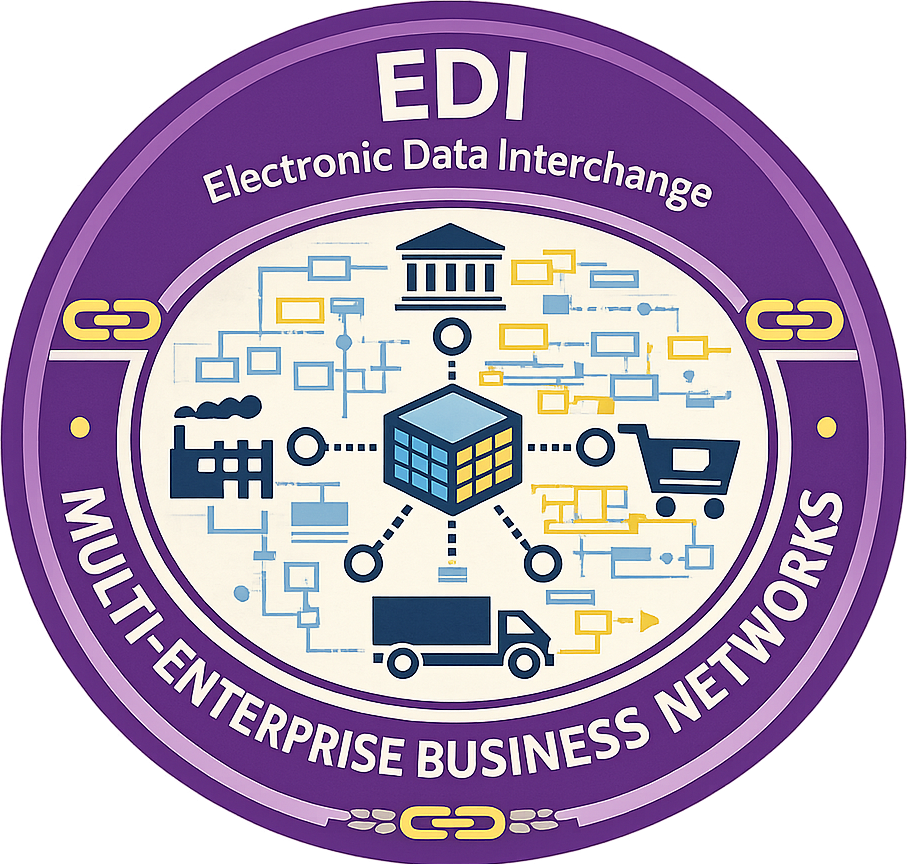
Companies use different EDI standards based on geography, industry requirements, and trading partner mandates. Regional dominance, regulatory frameworks, and existing partner ecosystems typically determine whether X12 or EDIFACT is used within a given supply chain.
How do you choose an EDI standard?
Choosing an EDI standard depends on trading partner requirements, geographic scope, and industry regulations. Organizations operating primarily in North America typically use X12, while those engaged in international trade adopt EDIFACT. Many enterprises implement both to support global interoperability.
Can SAP use both ANSI X12 and EDIFACT?
Yes. SAP supports both ANSI X12 and EDIFACT through integration middleware, EDI translators, and cloud integration platforms. Organizations often exchange X12 with North American partners and EDIFACT with international partners while maintaining a single ERP environment.
Can Oracle use both ANSI X12 and EDIFACT?
Yes. Oracle ERP platforms commonly exchange both ANSI X12 and EDIFACT documents through integration platforms that transform, validate, and route transactions based on trading partner requirements. This enables organizations to support domestic and global trading networks from a unified ERP system.
Can one company use both ANSI X12 and EDIFACT?
Yes. Many multinational organizations exchange ANSI X12 with North American partners and EDIFACT with international customers, suppliers, logistics providers, and customs authorities. Modern integration platforms allow both standards to operate concurrently through shared mappings, orchestration, and monitoring.
Can one system support both?
Yes, modern EDI platforms can support both ANSI X12 and EDIFACT within a single system. Using translation engines and canonical data models, organizations can manage multi-standard environments and enable seamless communication across global trading partners. Platforms like PartnerLinQ provide unified orchestration across standards and networks.
#PatnerLinQInsight
Unlocking the Power of Multi-Enterprise Supply Chain Business Networks - PartnerLinQ
Integrated vs. Stand Alone EDI Solution | ParterLinQ
#LearnEDI
What is the difference between ANSI X12 and EDIFACT?
Odette Message Types – Understanding the EDI Equivalents
VDA Message Types – Understanding EDI Equivalents | PartnerLinQ



Explore Our Integration Solutions

PartnerLinQ Integration Solutions
Connect Everything. Integrate Intelligently.
Future-Proof Your Business with Composable, AI Powered Connectivity.