Introduction
Today’s supply chains operate across a multitude of enterprise level systems, subsystems, and geographies. Markets and models that were simply not available 20, 10, even 5 years ago.
Today’s supply chains require closer attention to change, consider the gig economy, the advent of AI and the speed at which these technologies have arrived and taken hold, changes that resolved themselves as long-term transformations, lasting change, change that has and will forever impact the supply chains of today.
Today’s supply chains require more than a single integration tool, more than one connectivity model, more than a batch document exchange, more than EDI and more than a legacy EDI environment.
Organizations increasingly seek out platforms that combine Electronic Data Interchange (EDI), Application Programming Interfaces (APIs), and cloud-native integration services. They are looking for a unified digital backbone. Modern EDI environments have, as a result, evolved from yesterday’s transaction message exchange models into intelligent, scalable, multi-enterprise collaboration suites that supports visibility, adaptability, and orchestration across partners, systems, and business processes.
A modernization effort, by that reasoning, needs to focus simultaneously on complementary objectives:
- Extending EDI with APIs
- Enabling hybrid integration models that bridge legacy and modern systems
- Deploying these capabilities on scalable cloud platforms that support multi-enterprise business networks.
What is EDI modernization?
EDI modernization is the process of extending traditional Electronic Data Interchange systems with APIs, cloud platforms, and hybrid integration models. It transforms batch-based document exchange into a unified execution layer that supports real-time visibility, scalable partner onboarding, and multi-enterprise orchestration without replacing existing EDI investments.
Why is traditional EDI no longer enough?
Traditional EDI is not sufficient because it was designed for batch-based, point-to-point communication between fixed partners. Modern supply chains require real-time data access, API connectivity, and cloud scalability. Without modernization, organizations face integration sprawl, limited visibility, and slow partner onboarding.
Moving Beyond Legacy EDI Infrastructure without Replacing What Works 
Electronic Data Interchange (EDI) continues to power global B2B commerce through structured standards such as ANSI X12 and EDIFACT. Purchase orders (850), invoices (810), shipment notices (856), healthcare claims (837), and remittance advice (835) remain mission-critical transactions across retail, healthcare, logistics, and manufacturing ecosystems yet today’s digital economy requires more than batch document exchange.
Today’s digital economy is talking about API-driven marketplaces, SaaS applications, real-time customer expectations, and multi-cloud ERP environments, environments that demand a unified execution layer that combines:
- Standards-based EDI
- API connectivity
- Hybrid integration architecture
- Cloud-native scalability
- Transaction-level visibility
The Problem: Fragmented Integration Environments Create Operational Friction
A fragmented integration environment exists when an organization operates multiple disconnected connectivity models across trading partners, enterprise systems, and digital platforms. Most enterprises operate multiple disconnected integration models at one or more levels of their organization.
What is integration sprawl?
Integration sprawl is the uncontrolled growth of disconnected integration tools, mappings, APIs, and data flows across an organization. It occurs when systems evolve without a unified architecture, leading to duplicate logic, inconsistent data, increased operational risk, and slower onboarding of partners and applications.
Over time, integration stops being a coordinated capability and becomes a patchwork of point solutions. Integration sprawl increasing onboarding time, exception volume, and operational risk. Each new partner or digital channel adding complexity instead of strategic advantage.
| Integration Model Pattern | Environment / Scenario | Why It Happens | Operational Impact |
|---|---|---|---|
| EDI + API Parallel Stacks | Legacy EDI translator runs via VAN/AS2 while APIs handle real-time integrations | Digital evolves separately from legacy B2B | Duplicate logic, inconsistent monitoring |
| On-Prem + Cloud iPaaS | ERP on-prem; SaaS via cloud integrations | Gradual cloud adoption | Duplicate mappings, fragmented visibility |
| Regional Silos | Different regions use different integration stacks | Regulations, acquisitions | No global visibility |
| Multi-ERP | Multiple ERP systems coexist | M&A, phased rollouts | Complex mapping, duplication |
| Custom Scripts | Scripts alongside middleware | Speed requirements | Risk, poor monitoring |
| SaaS Connectors | Direct SaaS integrations | Department-led adoption | Data inconsistency |
| Hybrid VAN + AS2 | Mixed partner connectivity | Partner preferences | Multiple workflows |
| Manual Monitoring | Emails + spreadsheets | No central observability | Delayed issue detection |
| Industry Platforms | Specialized systems operate separately | Vertical needs | Siloed metrics |
| Legacy Retained | Old systems kept after upgrade | Risk avoidance | Higher cost, duplication |
Fragmentation is architectural, operational, and organizational. Generally organized (engineered) as temporary models, they tend to survive for long periods of time when all signs point to consolidation. Each system performs part of the job, none of them governs the whole, yet they exist when they should not, they don’t have to.
| Component | Characteristic | Resulting Risk |
|---|---|---|
| Legacy EDI translators | Siloed transformation logic | Exception backlog, scaling challenges, compliance vulnerabilities |
| VAN connections | Batch, static mapping | Latency, volume-based billing |
| On-prem middleware | Siloed transformation logic | Scalability limits, lifecycle management issues, version drift |
| API gateways | Real-time but unmanaged | Data fragmentation, API sprawl, no canonical normalization |
| Custom scripts | Reactive transformations | Governance gaps, key-person risk, performance bottlenecks |
| SaaS connectors | Cloud-native | Edge-case failures, lack of canonical alignment, alert gaps |
| Manual workflows | Reactive transformation logic | High operational cost, governance gaps, business impact risk |
| Manual monitoring workflows | Reactive | Delayed detection, cross-team friction, reactive posture |
Structural Risk Summary
Structural risk is the cumulative instability created by disconnected integration models. Left largely unmanaged in time it increases cost, slows growth, and reduces operational predictability in evolving event-driven ecosystems. Modernization replaces structural risk with governed scalability transforming integration from reactive infrastructure into strategic execution.
| Risk Category | How Disconnected Models Contribute |
|---|---|
| Integration Sprawl | Multiple tools perform overlapping functions |
| Mapping Sprawl | Each stack maintains its own transformations |
| Limited Visibility | No unified transaction lifecycle tracking |
| Exception Volume | Validation logic varies per stack |
| SLA Inconsistency | Different monitoring standards per model |
| Change Management Risk | Format updates ripple across environments |
| Scalability Constraints | Infrastructure and mappings grow independently |
The Evidence: Digital Ecosystems Require Hybrid Transaction Models 
Modern supply chains require both structured document exchange and real-time data access. Organizations that unify EDI and APIs through a canonical data model reduce mapping duplication, accelerate onboarding, and improve SLA adherence³.
Industry research consistently identifies integration technical debt as a top operational constraint in digital transformation initiatives.
EDI Strengths
- High-volume transactions
- Compliance-driven exchange
- Embedded in the Ecosystem
API Strengths
- Real-time availability checks
- Event-based (e.g., push) notifications
- Mobile / Portal integration
The Platform: A Unified Execution Layer for EDI + API + Cloud
Modernization succeeds when EDI and APIs operate within a centralized orchestration framework. The objective: eliminate fragmentation and standardize execution across the ecosystem rather than layering in additional software, middleware, point solutions. The outcome: a centralized orchestration architecture that delivers:
- Standards compliance (X12, EDIFACT, HL7)¹
- Hybrid cloud flexibility
- Centralized monitoring
- Canonical data normalization
- Governed automation
A modern multi-enterprise integration platform that operate as a unified execution layer — combining B2B/EDI, APIs, backend enterprise integrations, and transaction intelligence within a single governed environment delivering solid business outcomes.
Canonical Data Modeling & Normalization
Canonical data modeling and normalization is the process of transforming data from multiple systems, formats, and partners into a standardized internal structure. It ensures consistent semantics across EDI, APIs, and applications, reducing mapping complexity, improving data quality, and enabling scalable integration, real-time visibility, and advanced analytics across supply chain ecosystems.
What is a canonical data model in EDI?
A canonical data model in EDI is a standardized internal data structure that normalizes information across EDI, APIs, and enterprise systems. It eliminates point-to-point mappings, reduces transformation complexity, and enables consistent data exchange, analytics, and AI-driven automation across multi-enterprise supply chains.
A canonical data model:
- Normalizes EDI and API payloads
- Reduces/Eliminates duplicative transformation logic
- Simplifies the ‘onboarding’ of customers, partners, and systems
- Enables analytics and assures AI readiness
Canonical Data Modeling ensures data flows are transformed into — and out of — a shared data model. Data curated into such canonical data structures are normalized for cross-system integrity/interoperability, they use consistent (e.g., normalized) semantics, ensuring consistent data consumption across the supply chain and its lifecycle and is incredibly helpful when applying advanced AI functionalities, as you are starting to see today. Much to the chagrin of AI luminaries, AI is not magic, quite the contrary, AI systems are significantly more effective when consuming canonical, normalized data structures.
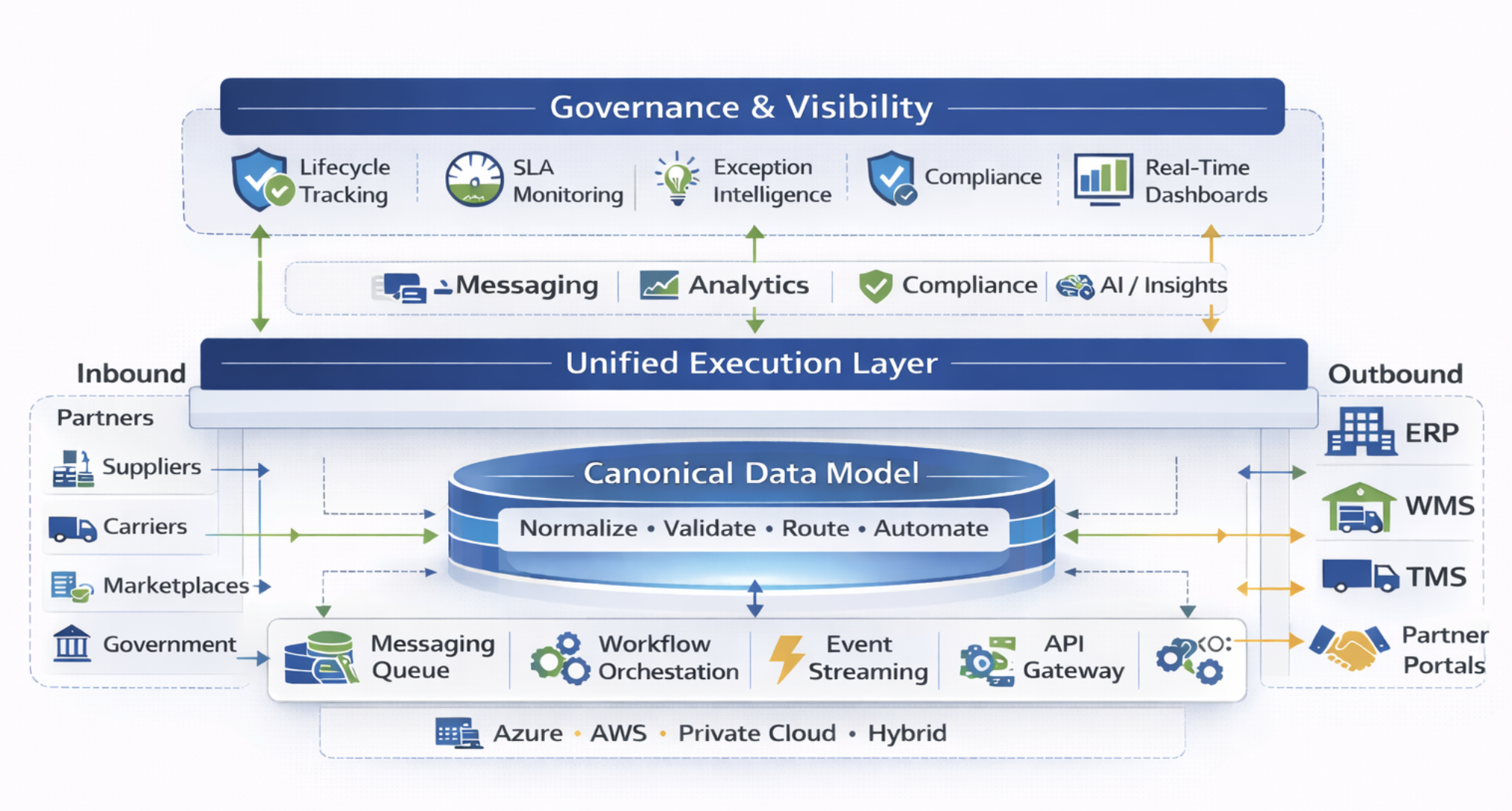
Canonical normalization is foundational to hybrid integration maturity. AI systems (machine learning models, anomaly detection engines, LLM-based agents, predictive analytics) require:
- Consistent field names
- Stable schema structure
- Clean, validated data
- Historical consistency
- Contextual metadata
Without normalization, AI must first spend computational effort:
- Reconciling field mismatches
- Interpreting inconsistent structures
- Handling nulls and exceptions
- Resolving semantic ambiguity
…which reduces efficiency and increases training noise.
Prevent Mapping Sprawl Before It Scales
Mapping sprawl is the uncontrolled growth of data transformation logic across systems, partners, and formats — where each new connection requires its own custom mapping instead of reusing a standardized model.
How do canonical data models reduce Mapping sprawl?
Mapping sprawl occurs in point-to-point environments. Point-to-point mappings increase exponentially as partner counts grow. Every additional partner increases transformation complexity as each new connection requires:
- Custom field mapping
- Custom transformation logic
- Custom validation rules
- Custom exception handling
What canonical data models do is eliminate the effort committed to point-to-point mappings by increasing data stores to hold luggage data until such time as it becomes needed or finds a home in the host environment, thereby increasing resources committed to growth in evolving event-driven ecosystems. Modernization occurs by the prevention of mapping sprawl, replacing structural risk with governed scalability
Transaction-Level Visibility & Exception Intelligence
Transaction-level visibility and exception intelligence depend on a foundational capability: a consistent data structure (e.g., curated data). A Canonical Data Model (CDM) standardizes how transactions are represented internally. Data curated into canonical models is normalized for cross-system integrity/interoperability, uses consistent semantics, which virtually ensures consistent AI consumption across the supply chain lifecycle. That level of normalization that the CDM supplies is what makes real-time monitoring, cross-system correlation, and intelligent exception handling possible. Systems are significantly more efficient when consuming canonical, normalized data structures, AI systems included, with canonical normalization, visibility becomes deterministic.
Integration moves from Reactive to Deterministic
When we say integration moves from reactive to deterministic, what we are describing a shift in how integration environments are governed, monitored, and controlled. Tactically it is the difference between responding to failures after they happen vs. designing a system so outcomes are predictable, observable, and to the extent that they can be controlled, controlled in advance.
The underlying issue is not that EDI fails, the issue is that legacy EDI architectures, typically single integration tools were not designed for hybrid, event-driven ecosystems and as a result exception volume — not standards — overwhelm most B2B teams.
Modern environments, even single integration tool and those without canonical normalization have, over the years, introduced 
- Real-time dashboards
- SLA tracking
- Cross-transaction correlation
- Automated exception routing
- AI-assisted anomaly detection
Purpose-built cloud based multi-enterprise orchestration platforms embed transaction monitoring and decision intelligence directly into the integration layer rather than treating visibility as a bolt-on feature. Visibility part of the governance.
Industry Modernization Scenarios: The role of APIs in modernizing EDI
APIs introduce real-time interaction and event-driven data exchange into traditionally asynchronous EDI workflows. APIs enable applications such as e-commerce platforms, warehouse systems, and transportation systems to interact directly with supply-chain data without waiting for batch document cycles.
| Function | Contribution to EDI Modernization |
|---|---|
| Real-time data access | Enables live order status, shipment tracking, and inventory updates |
| System-to-system orchestration | Connects ERP, WMS, TMS, and partner platforms directly |
| Event-driven integration | Supports alerts and business rule triggers |
| Developer extensibility | Allows custom applications to consume EDI-derived data |
EDI vs API vs Hybrid Integration 
While EDI enables standardized, high-volume transactions, APIs support real-time data exchange, a hybrid models combine both to deliver flexibility and scalability. Organizations that integrate these approaches together create a unified execution layer capable of supporting both structured workflows and dynamic, event-driven interactions.
Should I Replace EDI with APIs?
No. APIs complement EDI. EDI remains optimal for high-volume structured exchange, while APIs enable real-time interoperability.
Hybrid Integration Model (Modern Operating Reality)
Hybrid integration is not a transitional architecture—it is the permanent operating model of modern supply chains, where structured transactions and real-time services must coexist.
What is hybrid EDI integration?
Hybrid EDI integration combines traditional EDI transactions with APIs, cloud platforms, and file-based integrations within a unified orchestration layer. This approach allows organizations to maintain existing partner connections while enabling real-time data exchange, faster onboarding, and scalable digital transformation.
Hybrid Integration Requires an Execution Layer
While APIs satisfy agility, APIs do not replace EDI. APIs optimize application interaction and real-time services, AS2 optimizes partner-to-partner document exchange. APIs complement EDI by exposing normalized business data that originates from standardized transactions. Hybrid integration therefore emerges as the practical operating model and APIs extend EDI in several ways:
| Dimension | Traditional EDI | APIs | Why Hybrid Matters |
|---|---|---|---|
| Interaction Model | Asynchronous, document-based | Real-time, request-response or event-driven | APIs introduce immediacy; EDI governs structured exchanges |
| Primary Role | Partner-to-partner transaction backbone | Application-to-application interaction layer | Full lifecycle coverage — EDI moves commerce; APIs enable responsiveness |
| Data Format | Standardized (X12, EDIFACT) | Flexible (JSON, XML) | EDI enforces compliance; APIs optimize agility |
| Data Structure | Structured | Flexible | Normalized via Canonical Data Modeling |
| Timing | Batch cycles or scheduled exchange | Instant or near real-time | Combines scheduled + instant execution; reduces latency for events like shipment updates |
| Acknowledgment | Functional acknowledgments (e.g., 997) | HTTP status codes, callbacks, webhooks | Different confirmation models |
| Business Focus | Document-centric (PO, ASN, Invoice) | Resource-centric (Inventory, Status, Rates) | EDI governs transactions; APIs expose business objects |
| Reliability | Durable, auditable, legally recognized | Stateless or session-based service calls | EDI provides transactional integrity |
| Best Fit | High-volume standardized B2B commerce | Dynamic digital workflows and SaaS integration | Complementary strengths |
Is API-first integration a replacement for EDI? 
Generally speaking, No. API-first integration does not replace EDI. EDI remains the backbone for high-volume, standardized B2B transactions, while APIs enable real-time interaction and data access. Organizations that attempt to replace EDI with APIs often introduce fragmentation, lose transactional integrity, and increase operational risk.
What Happens Without Hybrid Integration?
Organizations that do not adopt hybrid integration typically experience:
- API proliferation without governance
- Duplicate logic across EDI and APIs
- Fragmented visibility across systems
- Increased exception volume
- Slower onboarding of partners and applications
Hybrid Integration Model: combining EDI, APIs, and cloud services
Hybrid integration unifies EDI, APIs, and legacy file transfer methods into a single orchestration layer. This approach allows organizations to preserve existing trading partner connections while enabling modern application integration. Hybrid integration allows organizations to onboard new partners faster, integrate acquisitions without disrupting operations, and extend digital processes across multiple enterprises and without increasing fragmentation or digital dead ends.
| Layer | Role in the Architecture |
|---|---|
| Connectivity layer | Supports AS2, SFTP, APIs, and messaging protocols |
| Transformation layer | Translates and normalizes EDI and API payloads |
| Orchestration layer | Executes workflows across multiple systems |
| Visibility layer | Provides dashboards, alerts, and operational insight |
Multi-standard EDI intelligence as the foundation 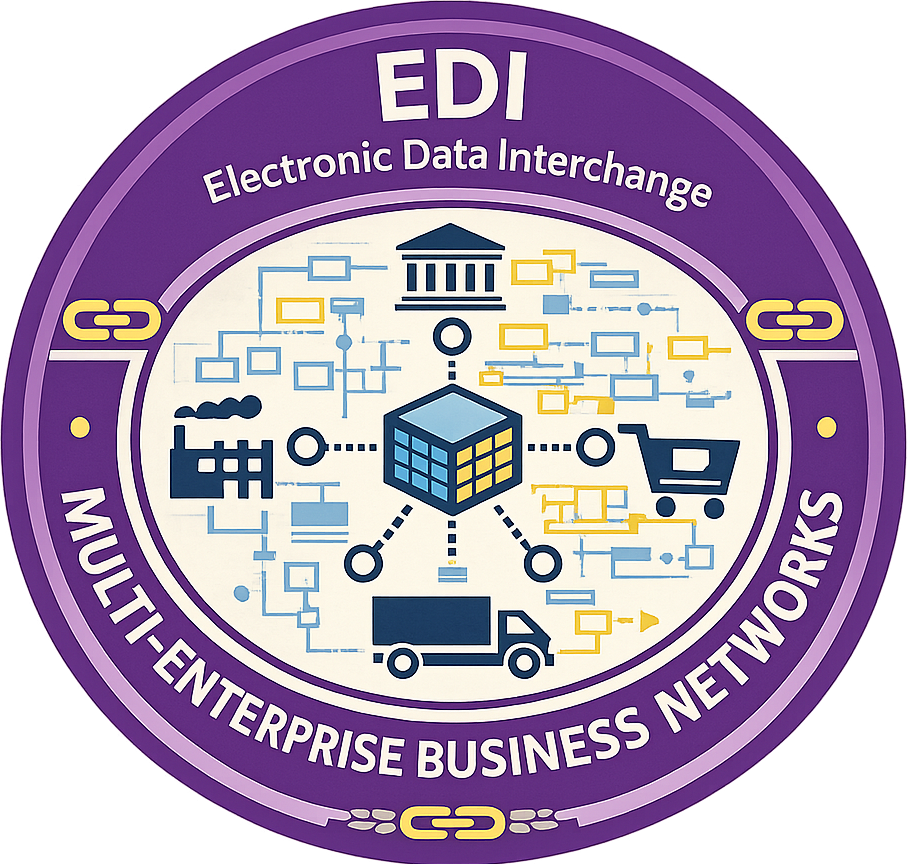
Multi-Standard EDI Intelligence is a critical component for success. Multi-standard EDI intelligence enables a platform to understand and harmonize different EDI dialects such as ANSI X12, EDIFACT, Odette, VDA, SAP IDoc, and AIAG.
Multi-standard intelligence allows organizations to exchange business meaning rather than just document formats. APIs and cloud services can then consume normalized business events instead of raw EDI syntax. A transformative capability, captured within the canonical data model transforming translation from simple syntax conversion into semantic normalization, increasing its ability to support integration and advanced capabilities including AI.
| Business Process | EDIFACT | X12 | Odette | VDA | SAP IDoc | AIAG |
|---|---|---|---|---|---|---|
| Order Creation | ORDERS | 850 | ORDERR | 4925 | ORDERS05 | 850 |
| Order Acknowledgment | ORDRSP | 855 | REPORD | 4926 | ORDRSP | 855 |
| Order Change | ORDCHG | 860 | ORDCHG | – | ORDCHG | 860 |
| Shipment Notification (ASN) | DESADV | 856 | AVIEXP | 4913 → 4987 | DESADV | 856 |
| Forecast / Planning | DELFOR | 830 | DELINS | 4905 → 4984 | DELFOR02 | 830 |
| Delivery Instruction | DELINS | 862 | DELINS | 4905/2 | DELINS | 862 |
| Just-in-Time Delivery | DELJIT | 866 | SYNCRO | 4915 → 4985 / 4916 | DELJIT | 866 |
| Invoicing | INVOIC | 810 | INVOIC | 4906 → 4938 | INVOIC02 | 810 |
| Receiving Advice | RECADV | 861 | RECADV | 4989 | RECADV | 861 |
| Sales Reporting | SLSRPT | 867 | – | – | SLSRPT | 867 |
Cloud platforms and multi-enterprise business networks for the platform 
Cloud-native integration platforms provide scalability, resilience, and geographic reach. Multi-tenant SaaS architectures enable multiple enterprises to collaborate on shared processes while maintaining data separation and governance.
Multi-enterprise supply chain business networks use these capabilities to coordinate processes across manufacturers, suppliers, logistics providers, and retailers. Collaboration replaces point-to-point integration as the dominant architectural pattern.
How do you modernize an EDI environment?
Modernizing an EDI environment involves extending EDI with APIs, adopting hybrid integration architectures, implementing a canonical data model, and deploying cloud-based platforms. This approach reduces integration sprawl, improves visibility, accelerates onboarding, and enables scalable multi-enterprise collaboration.
What is the difference between EDI, APIs, and iPaaS?
EDI enables standardized, high-volume B2B transactions, APIs provide real-time system interaction, and iPaaS platforms connect applications and data across environments. Modern integration strategies combine all three into a unified execution layer to support both structured commerce and real-time digital workflows.
What should you look for in an EDI modernization platform?
An EDI modernization platform should support hybrid integration, canonical data normalization, multi-standard EDI, API orchestration, and cloud scalability. It must provide transaction-level visibility, centralized governance, and partner onboarding capabilities to eliminate fragmentation and support end-to-end supply chain execution.
Roadmap for modernizing an EDI environment
Today, brands, suppliers, retailers, 3PLs, and carriers require EDI platforms that support broader operational orchestration and capable of evolving with business growth. Transactional maturation—from order capture to forecasting, replenishment, logistics, and compliance, even accruals and post-transaction settlements require an element of planning and forethought
These organizations typically progress through defined maturity stages when modernizing EDI. Each stage builds on the previous one while expanding digital reach. A staged approach that ensures continuity of operations while enabling long-term transformation.
| Maturity Stage | Integration Focus | Business Outcome |
|---|---|---|
| Establish connectivity | Core EDI automation | Compliance and accuracy |
| Expand workflows | Hybrid EDI and API integration | Visibility and coordination |
| Extend intelligence | Multi-standard normalization and analytics | Predictive insight and resilience |
| Orchestrate ecosystems | Cloud-based multi-enterprise networks | End-to-end digital supply chains |
Retail & General Merchandise 
- EDI 850/855/856/810 forms the backbone
- API marketplace synchronization
- Cloud scaling during seasonal peaks
Healthcare
- 837 → 277 → 835 workflows
- API-based eligibility queries
- HIPAA-aligned cloud governance
Logistics & Transportation 
- EDI 204 load tenders and 990 acceptance
- EDI 214 shipment status
- API telematics integration
- Event-based exception alerts
Manufacturing
- EDI 830/862 forecasts
- API-driven Manufacturing Execution System (MES) updates
- Multi-tier supplier orchestration
Business Value of modernization
EDI modernization is not a technology upgrade. It is an operational performance strategy. Where legacy integration architectures often create operational friction, onboarding delays, and limited visibility. Modernizing EDI—by combining cloud scalability, API integration, canonical data normalization, and centralized orchestration—unlocks measurable business value.
Modernizing EDI delivers measurable operational and strategic benefits:
| Dimension | Value Delivered |
|---|---|
| Operational efficiency | Reduced manual intervention and faster processing |
| Partner agility | Accelerated onboarding and protocol flexibility |
| Visibility | Real-time status and proactive exception management |
| Resilience | Improved response to disruption and volatility |
| Innovation | Platform extensibility through APIs and composable services |
Where traditional EDI environments were designed for batch document exchange, partner-specific mappings, and isolated monitoring and standards (e.g., ANSI X12 & EDIFACT) modern EDI become an orchestration that aligns digital connectivity with business outcomes foundational to global commerce rather than a technical (e.g., black box) utility.
Unified Execution vs Point Capabilities 
Modernization maturity requires unification across:
- B2B/EDI
- APIs
- Backend integrations
- Monitoring
- Automation
Partner onboarding
Platform Evaluation Checklist
An EDI platform evaluation checklist includes criteria that ensures the platform eliminates integration sprawl and supports end-to-end supply chain execution.
| Capability | Why It Matters | Risk if Missing |
|---|---|---|
| Canonical Data Model | Eliminates mapping sprawl | Exponential complexity |
| Hybrid Integration | Supports EDI + APIs | Fragmentation |
| Multi-standard EDI | Global interoperability | Limited scalability |
| Visibility Layer | SLA + exception control | Blind operations |
| Partner Onboarding | Speed to revenue | Delayed growth |
Competitor Gap Analysis
Modernization approaches vary significantly across integration vendors, key words indicative of the approach used.
| Market Position / Strength | Gap in a Modernization Context |
|---|---|
| B2B/EDI + Managed Services | Often positioned as integration + file transfer, not a unified execution layer |
| Retail EDI Network | Network-centric model may limit hybrid API depth |
| Enterprise-grade B2B | Heavy infrastructure footprint; modernization can be complex |
| iPaaS API integration | Strong API + SaaS integration, but may lack EDI-native depth |
| Data integration & MDM | Data-centric, not B2B/EDI-native, leading to integration fragmentation risk |
| Healthcare EDI focus | Industry-specific scope, limited B2B breadth, fragmented integration risk |
| API-native EDI | Developer-first approach, but limited broader orchestration capabilities |
| Integration services provider | Service-centric model vs unified platform execution model |
Purpose-built multi-enterprise platform that integrates connectivity and decision intelligence reduces fragmentation while accelerating partner onboarding and operational visibility. Success means avoiding fragmented integration risk, avoiding solutions and/or providers that specialize in one dimension: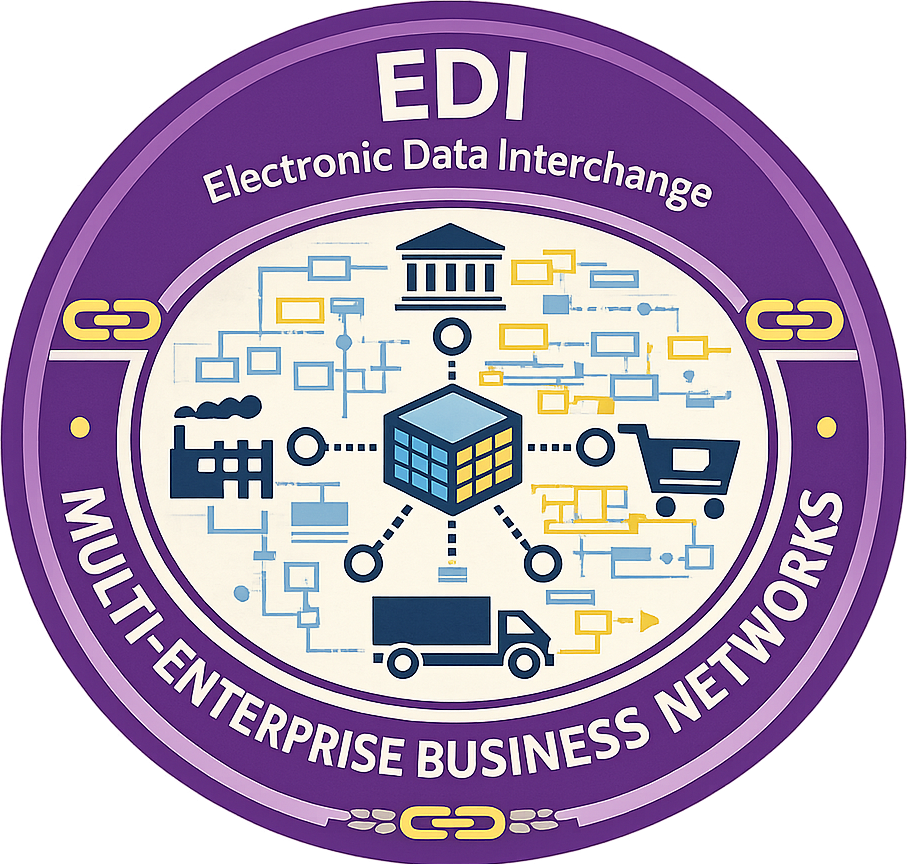
- EDI network
- API integration
- Data transformation
- Managed services
- Industry-specific processing
How long does EDI modernization take?
EDI modernization typically takes 3 to 12 months, depending on complexity, number of trading partners, and integration scope. Phased approaches can deliver initial value in 60–90 days by extending EDI with APIs and cloud capabilities, while full transformation—including canonical data modeling and ecosystem orchestration—may take 6–12 months.
Typical Modernization Timeline (Phased)
| Phase | Duration | What Happens | Outcome |
|---|---|---|---|
| Phase 1: Stabilize & Assess | 2–4 weeks | Audit integrations and identify sprawl | Clear roadmap |
| Phase 2: Quick Wins | 30–90 days | API extensions, visibility layer | Immediate ROI |
| Phase 3: Canonical Model | 2–4 months | Normalize data across systems | Reduced mapping |
| Phase 4: Hybrid Integration | 3–6 months | EDI + API orchestration | Faster onboarding |
| Phase 5: Full Orchestration | 6–12 months | Unified execution layer | Scalable ecosystem |
Why do many integration platforms fail to modernize EDI effectively?
Many integration platforms fail to modernize EDI because they specialize in a single capability—such as APIs, data integration, or file transfer—without unifying execution. This creates fragmented architectures, duplicated logic, and limited visibility, preventing true end-to-end supply chain orchestration.
What makes a modern EDI platform different from traditional integration tools?
Modern EDI platforms differ from traditional integration tools by combining EDI, APIs, cloud scalability, and canonical data models into a unified execution layer. Unlike point solutions that specialize in one area, modern platforms provide end-to-end orchestration, visibility, and governance across the entire supply chain ecosystem.
Common EDI Modernization Mistakes
Common EDI modernization mistakes include replacing EDI entirely with APIs, implementing API-only strategies without governance, failing to use a canonical data model, and adopting multiple disconnected tools. These approaches increase integration sprawl, reduce visibility, and create long-term operational inefficiencies.
| Mistake | Why It Happens | Impact |
|---|---|---|
| Replacing EDI with APIs | Misunderstanding roles | Loss of compliance |
| API-only architecture | Developer bias | Fragmentation |
| No canonical model | Short-term thinking | Mapping sprawl |
| Tool proliferation | Department autonomy | Integration sprawl |
What is the difference between an execution layer and point integration tools?
An execution layer unifies EDI, APIs, cloud integration, and monitoring into a single governed platform, while point solutions focus on individual capabilities such as file transfer or API management. Execution layers eliminate fragmentation and provide end-to-end visibility, control, and scalability across supply chain operations.
Modernization Roadmap: Integration Modernization Capability Maturity Model
Modernization is not a single technology upgrade. It is the elevation of integration from reactive infrastructure to governed execution. Architectural coherence must exist from the start. Organizations may activate capabilities like APIs progressively. At the center of this approach to modernization is canonical data normalization. It ensures systems map once to the canonical model where APIs extend rather than duplicate logic. Visibility remains consistent, and automation operates on base of structured, reliable data suitable to AI consumption.
| Maturity Level | Focus | Canonical Role | Business Outcome |
|---|---|---|---|
| Level 1 — Fragmented | Disconnected EDI, APIs, middleware, and manual monitoring | No canonical normalization; point-to-point mappings dominate | High exception volume, SLA variability, slow onboarding |
| Level 2 — Controlled | Centralized EDI management and integration governance | Introduces canonical normalization between systems and partners | Reduced mapping sprawl, improved stability, lower regression risk |
| Level 3 — Hybrid | API orchestration layered onto EDI backbone | Canonical business objects exposed consistently across EDI and APIs | Real-time responsiveness without duplicating logic |
| Level 4 — Deterministic | Unified lifecycle tracking and exception governance | Canonical lifecycle states standardize transaction visibility | Lower exception volume, predictable SLA adherence |
| Level 5 — Intelligent | Automation, analytics, and AI-driven orchestration | Canonical data fuels structured analytics and predictive modeling | Faster resolution cycles, proactive issue prevention, scalable resilience |
The Outcome
Connectivity alone is insufficient. Execution control defines competitive advantage. Organizations that modernize EDI by combining APIs, hybrid integration, and cloud orchestration achieve:
- Greater operational resilience
- Lower infrastructure burden
- Faster partner onboarding
- Reduced exception volume
- Improved SLA adherence
- Real-time visibility
Conclusion
A modern EDI environment integrates APIs, hybrid connectivity, and cloud platforms into a unified architecture that supports multi-enterprise collaboration. Multi-standard intelligence ensures interoperability across global partner ecosystems, while hybrid integration bridges legacy systems and modern applications. Cloud-native platforms provide scalability, visibility, and orchestration capabilities that transform EDI into a strategic digital backbone for the supply chain.
Frequently Asked Questions
What is EDI modernization?
EDI modernization is the process of extending traditional Electronic Data Interchange systems with APIs, cloud platforms, and hybrid integration models. It transforms batch-based document exchange into a unified execution layer that supports real-time visibility, scalable partner onboarding, and multi-enterprise orchestration without replacing existing EDI investments.
Can APIs replace EDI? 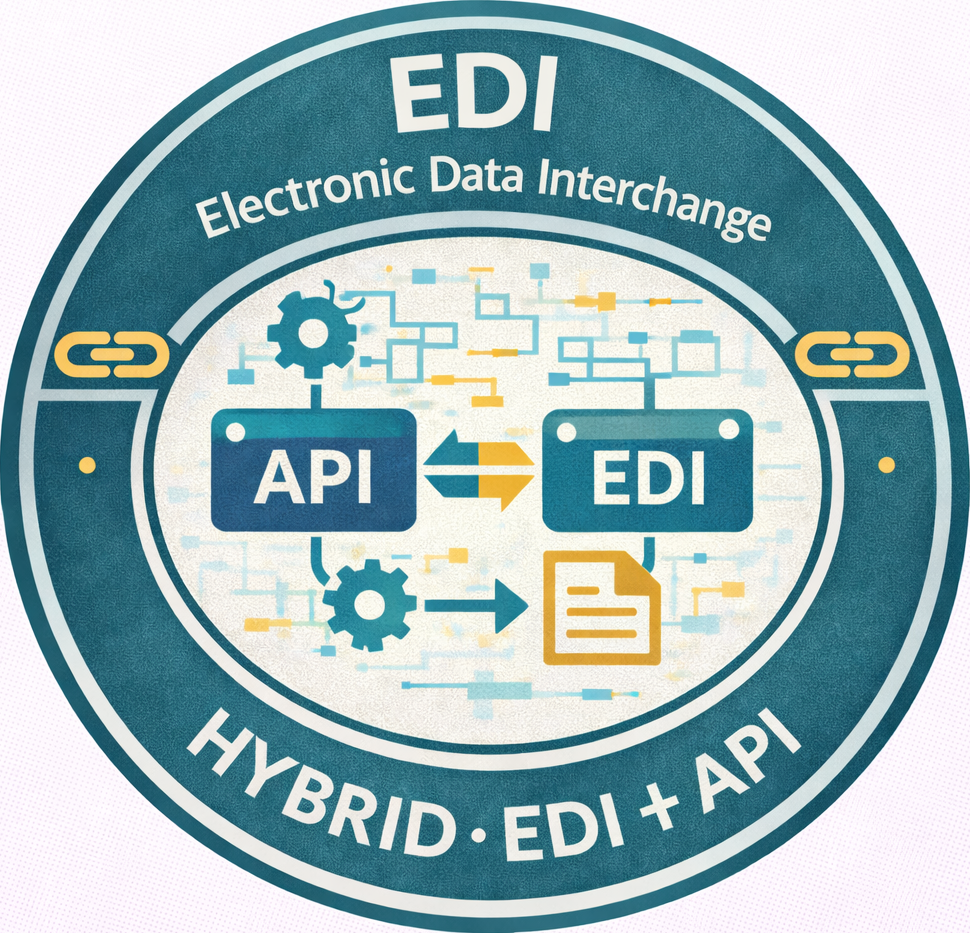
No. APIs complement EDI. EDI remains optimal for high-volume structured exchange, while APIs enable real-time interoperability.
What is hybrid integration in supply chains?
Hybrid integration connects on-prem systems, cloud platforms, EDI networks, and APIs within a centralized orchestration layer.
What is integration sprawl? 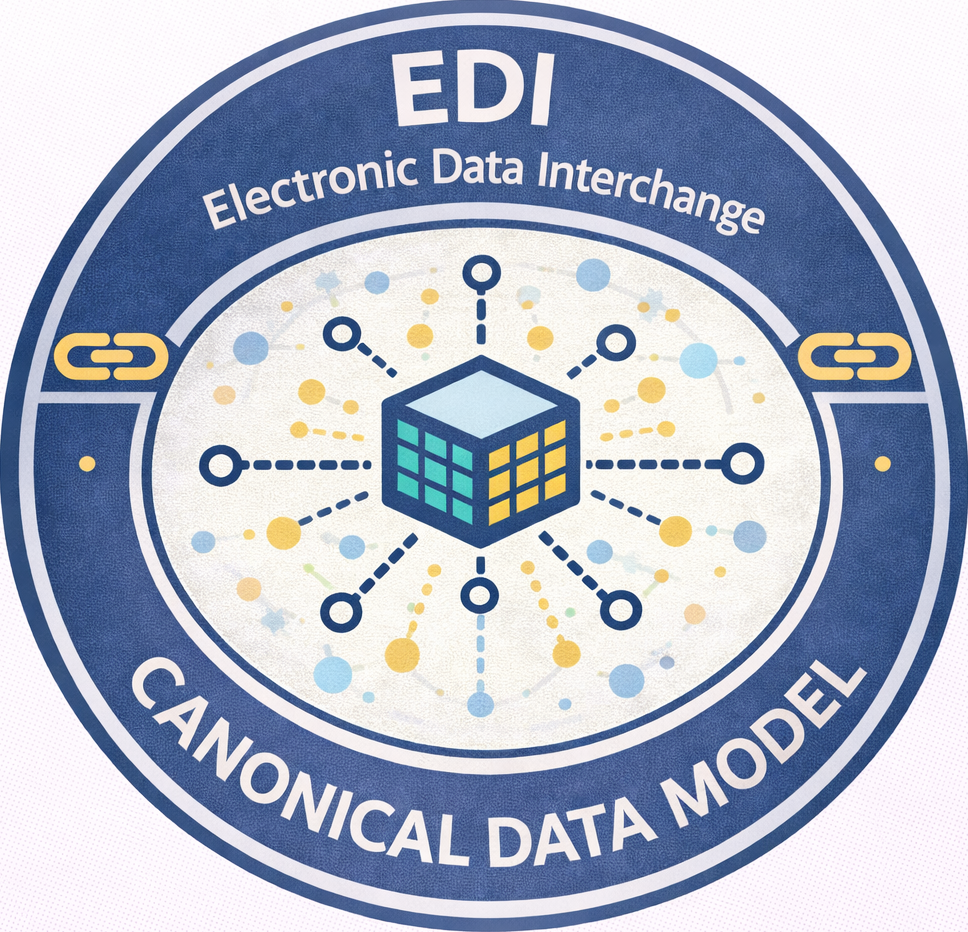
Integration sprawl is the uncontrolled growth of disconnected integration tools, mappings, APIs, and data flows across an organization. It occurs when systems evolve without a unified architecture, leading to duplicate logic, inconsistent data, increased operational risk, and slower onboarding of partners and applications.
What is a canonical data model?
A canonical data model (CDM) is a standardized internal data structure that standardizes how information is represented across systems, formats, and trading partners, it normalizes data from different systems, formats, and partners into a single, consistent representation and eliminates point-to-point mappings by transforming all data into a common format, enabling consistent integration, reduced complexity, improved scalability, and better support for analytics and automation.
People Also Ask
What is the best EDI platform?
There is no single “best” EDI platform—the point of this paper is to help you find the best fit for your architecture, scale, and integration strategy. Leading platforms in the market excel in different areas, the best choice for you and your business depends on your priorities, priorities which may include hybrid integration, scalability, canonical data modelling, or speed of onboarding.
How long does EDI modernization take?
EDI modernization typically takes 3 to 12 months, depending on complexity, number of trading partners, and integration scope. Phased approaches can deliver initial value in 60–90 days by extending EDI with APIs and cloud capabilities, while full transformation—including canonical data modeling and ecosystem orchestration—may take 6–12 months.
What are the risks of legacy EDI?
Legacy EDI environments carry risks such as integration sprawl, limited visibility, slow partner onboarding, and high maintenance costs. Designed for batch, point-to-point exchange, they struggle to support real-time APIs, cloud systems, and modern supply chain demands—leading to operational inefficiencies, increased errors, and reduced scalability.
What Is a complete solution?
A complete solution accommodates Transportation, Transformation and Integration, in other words it is not a single tool such as a VAN connection, On-prem middleware, or an API gateway. A complete solution is a unified execution platform that connects trading partners, enterprise systems, applications, and data (e.g., transportation), manages the trans-activity through this communication channel ensuring normalization, storage, and consumption (e.g., transformation) while it eliminates fragmentation across EDI, APIs, backend systems, and monitoring layers by operating as a centralized, governed integration environment (e.g., integration) — while embedding visibility and decision intelligence into every transaction flow.
Is Cloud-Based EDI Secure?
Yes, modern cloud integration platforms implement encryption, compliance frameworks, and role-based access controls that meet or exceed traditional on-prem models.
How Does Modernization Reduce Costs?
Centralized orchestration reduces mapping duplication, onboarding friction, exception volume, and infrastructure maintenance.
Footnotes:
Harnessing Hybrid Integration Strategies to Navigate the Complexities of Modern Supply Chains
Beyond EDI and Beyond APIs: Unlocking Modern Supply Chain Connectivity - PartnerLinQ
Unlocking the Power of Multi-Enterprise Supply Chain Business Networks with PartnerLinQ
Unlocking the Power of Multi-Enterprise Supply Chain Business Networks - PartnerLinQ
What is the difference between ANSI X12 and EDIFACT
What is the difference between ANSI X12 and EDIFACT?
How Can I Build a Flexible, Adaptable EDI Infrastructure?
How Can I Build a Flexible, Adaptable EDI Infrastructure?



Explore Our Integration Solutions

PartnerLinQ Integration Solutions
Connect Everything. Integrate Intelligently.
Future-Proof Your Business with Composable, AI Powered Connectivity.