
What is EDIFACT ORDRSP?
The EDIFACT ORDRSP is a purchase order response message used by suppliers to confirm, reject, or modify a buyer’s order (ORDERS). It ensures both parties agree on quantities, pricing, and delivery terms before fulfillment begins, reducing errors and improving supply chain coordination.
Transaction Identity Block
| Attribute | Description |
| Transaction Name | Purchase Order Response |
| EDIFACT Message | ORDRSP |
| Version | D96A |
| Functional Group | EDIFACT (UN/EDIFACT) |
| Industry Usage | Retail, Manufacturing, Distribution, Logistics |
| Primary Purpose | Confirm, reject, or modify a purchase order (ORDERS) |
| Typical Sender | Supplier / Seller |
| Typical Receiver | Buyer / Retailer |
| Common Preceding Transactions | ORDERS (Purchase Order), ORDCHG (Order Change) |
| Common Following Transactions | DESADV (ASN), INVOIC (Invoice), CONTRL (Acknowledgment) |
| Standard Version | UN/EDIFACT D96A |
The ORDRSP message is defined under the UN/EDIFACT D96A standard, maintained by the United Nations Economic Commission for Europe (UNECE). It serves as the global standard for purchase order response communication across international supply chains.
The EDIFACT ORDRSP (Purchase Order Response) is a structured message sent by the seller to respond to a buyer’s purchase order (ORDERS). It communicates acceptance, rejection, or modification of order terms, ensuring alignment before fulfillment begins.
The ORDRSP serves as the EDIFACT equivalent of the ANSI X12 855 Purchase Order Acknowledgment and is a critical control point in the procure-to-pay lifecycle.
What does an ORDRSP message do?
An ORDRSP message communicates a supplier’s decision on a purchase order, including full acceptance, partial acceptance, changes, or rejection. It provides line-level detail and ensures buyers have accurate visibility into supplier commitments before shipment and invoicing occur. The ORDRSP establishes agreement between trading partners by ensuring that execution proceeds only after both parties agree to the terms.
Why ORDRSP Matters?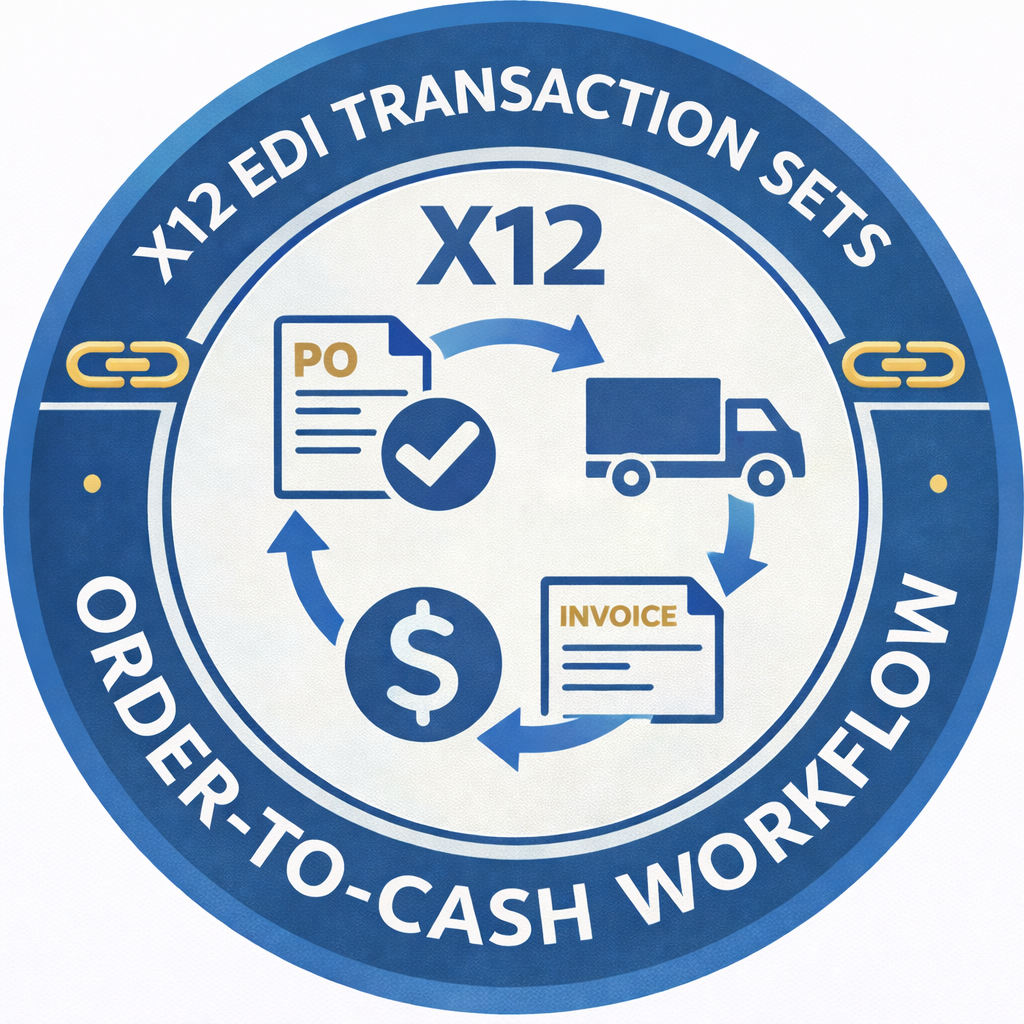
ORDRSP is a critical control point in the order lifecycle. Without it, buyers lack confirmation of supplier intent, increasing the risk of fulfillment errors, delayed shipments, and invoice discrepancies across the supply chain.
Visual Lifecycle Section
Who uses the ORDRSP message?
The ORDRSP message is used by suppliers to respond to purchase orders from buyers across industries such as retail, manufacturing, and logistics. It enables buyers to validate supplier commitments and ensures alignment before fulfillment begins
Role | Usage |
Retailers | Validate supplier commitments |
Manufacturers | Confirm production feasibility |
Distributors | Align inventory and fulfillment |
Logistics Providers | Plan shipments based on confirmed orders |
When is ORDRSP required?
ORDRSP is required after a purchase order is received and before shipment occurs. Many trading partners mandate it within defined SLAs to confirm acceptance or communicate changes, ensuring accurate fulfillment and reducing operational risk.
The ORDRSP is typically required:
Immediately after receiving an ORDERS message
When supplier confirmation is mandated by trading partner agreements
When order changes, exceptions, or delays occur
High-volume retail and distribution environments often enforce strict SLA-driven acknowledgment timelines.
Is the EDIFACT ORDRSP Mandated Under Regulation?
The ORDRSP is not universally mandated by regulation but is:
Required by many retailer/vendor compliance programs
Enforced through trading partner agreements
Critical for auditability in regulated industries
How does ORDRSP work in EDI?
ORDRSP is sent after a purchase order (ORDERS) and before shipment (DESADV). The supplier evaluates the order and responds with acceptance or changes. The buyer updates systems based on the response, ensuring fulfillment aligns with confirmed terms.
Upstream Transactions
| Stage | Transaction | Purpose |
| 1 | ORDERS | Buyer issues purchase order |
| 2 | ORDCHG | Buyer modifies order (if needed) |
Downstream Transactions
| Stage | Transaction | Purpose |
| 3 | ORDRSP | Supplier responds to order |
| 4 | DESADV | Shipment notification |
| 5 | INVOIC | Invoice issuance |
| 6 | CONTRL | Functional acknowledgment |
End-to-End Workflow Example
Buyer sends ORDERS
Supplier evaluates availability and constraints
Supplier sends ORDRSP (accept, reject, or modify)
Buyer updates ERP/OMS systems
Fulfillment proceeds based on agreed terms
Shipment (DESADV) and invoicing (INVOIC) follow
Industry-Specific Workflow Variations
Industry | Variation |
Retail | Line-level acknowledgments required |
Automotive | Integration with DELFOR / DELJIT schedules |
Grocery | High-frequency replenishment cycles |
Manufacturing | Multi-stage fulfillment confirmations |
Cross-Standard Canonical Mapping
Function | EDIFACT | X12 Equivalent | SAP IDoc |
Purchase Order | ORDERS | 850 | ORDERS05 |
Order Response | ORDRSP | 855 | ORDRSP-like mapping |
Order Change | ORDCHG | 860 | ORDCHG |
ASN | DESADV | 856 | DESADV |
Invoice | INVOIC | 810 | INVOIC |
How does PartnerLinQ use the ORDRSP?
PartnerLinQ acts as an execution control layer, leveraging ORDRSP to:
Normalize supplier responses into a canonical data model
Provide real-time visibility into order commitments
Automate ERP/OMS updates
Enable exception-driven workflows
ORDRSP becomes a control signal that drives downstream execution, not just a message.
Where is ORDRSP used?
ORDRSP is used globally across retail, manufacturing, logistics, and automotive industries. It supports supplier acknowledgment, delivery planning, and exception handling in high-volume, multi-partner supply chain environments.
Industry | Usage Context |
Retail & Apparel | Supplier confirmations |
Manufacturing | Production planning |
Grocery | Continuous replenishment |
Automotive | JIT/JIS coordination |
Logistics | Shipment readiness |
What Is the Purpose, Key Features, and Business Use Cases of the EDIFACT ORDRSP?
The EDIFACT ORDRSP provides a structured response to a purchase order, enabling suppliers to confirm, reject, or modify order terms. It ensures alignment between trading partners before fulfillment, improving accuracy, reducing disputes, and enabling real-time visibility into supplier commitments.
Operational Purpose
The ORDRSP establishes mutual agreement between buyer and supplier before execution begins. It acts as a control checkpoint in the order lifecycle, ensuring that:
Order quantities are confirmed or adjusted
Delivery dates are validated or revised
Pricing and commercial terms are aligned
Exceptions are identified before fulfillment
This prevents downstream disruption across shipping, invoicing, and payment processes.
Key Features
Feature | Description | Operational Impact |
Order Acknowledgment Header-level | Confirms acceptance, rejection, or modification of the purchase order | Eliminates ambiguity before execution |
Line-Level Detail | Supports item-by-item responses including quantities and delivery commitments | Enables granular planning and inventory control |
Change Management | Communicates supplier-driven changes to pricing, quantities, or dates | Reduces need for manual corrections or rework |
Status Communication | Uses standardized codes to indicate acceptance or rejection | Ensures consistent interpretation across systems |
| Pricing and allowance communication | Identifies trade items, trade quantities, and item prices at the item and summary level | Eliminates pricing discrepancies through Synchronization at the order/item level |
| Delivery scheduling visibility | Confirms acceptance of delivery schedule including quantities and delivery commitments | Reduces out of stock conditions and eliminates pricing discrepancies |
Integration with ERP/OMS | Automates ingestion of supplier responses into enterprise systems | Improves speed and reduces manual intervention |
Auditability | Provides a structured record of supplier commitments | Supports compliance and dispute resolution |
Global Standardization | Based on UN/EDIFACT D96A | Enables interoperability across international trading partners |
Business Use Cases
Use Case | Description | Example Scenario |
Order Confirmation | Supplier confirms ability to fulfill order as requested (Accepts or Rejects the order) | Retailer sends ORDERS; supplier accepts all items |
Partial Acceptance | Supplier accepts some items and rejects or modifies others | Supplier confirms available inventory and adjusts backordered items |
Delivery Rescheduling | Supplier updates delivery or shipment dates | Manufacturing delays require revised delivery timeline |
Price Adjustment | Supplier communicates pricing discrepancies or contract updates | Promotional pricing or contract-based adjustments applied |
Order Rejection | Supplier rejects order or specific lines | Product discontinued or unavailable |
Exception Handling Notification | Supplier flags constraints (e.g., shortages or delays) before fulfillment | Capacity or logistics issues impact delivery commitments |
Change Communication | Update pricing or delivery | Eliminates discrepancies |
Industry Applications
Industry | Application |
Retail & Apparel | High-volume order acknowledgment and replenishment validation |
Manufacturing | Production feasibility confirmation and supply alignment |
Grocery & CPG | Continuous replenishment and delivery coordination |
Automotive | Integration with DELFOR / DELJIT for JIT/JIS execution |
Logistics & Distribution | Shipment readiness and exception visibility |
What is the difference between ORDRSP, 855, and ORDCHG?
ORDRSP is the EDIFACT purchase order response, equivalent to the X12 855. It confirms or modifies an order. ORDCHG, however, is sent by the buyer to request changes. Together, these messages manage order alignment across global EDI standards.
Attribute | EDIFACT ORDRSP | X12 855 | EDIFACT ORDCHG |
Standard | UN/EDIFACT | ANSI X12 | UN/EDIFACT |
Transaction Type | Purchase Order Response | Purchase Order Acknowledgment | Purchase Order Change Request |
Who Sends It | Supplier / Seller | Supplier / Seller | Buyer |
Who Receives It | Buyer | Buyer | Supplier |
Primary Purpose | Confirm, reject, or modify a purchase order | Confirm, reject, or modify a purchase order | Request changes to an existing purchase order |
Business Role | Supplier response to order | Supplier response to order | Buyer-initiated modification |
Trigger Event | Receipt of ORDERS (PO) | Receipt of EDI 850 (PO) | Need to update or correct an existing PO |
Direction of Flow | Supplier → Buyer | Supplier → Buyer | Buyer → Supplier |
Change Capability | Yes (accept with amendments, partial acceptance) | Yes (accept with changes, partial acceptance) | Yes (explicit change request from buyer) |
Status Communication | Uses BGM codes (e.g., 29, 30, 31) | Uses ACK/BAK codes | Uses change instructions within message |
Line-Level Detail | Yes | Yes | Yes |
Equivalent Mapping | Equivalent to X12 855 | Equivalent to EDIFACT ORDRSP | Equivalent to X12 860 |
Position in Workflow | After ORDERS, before DESADV | After 850, before 856 | After ORDERS, before ORDRSP (or fulfillment) |
Typical Outcome | Confirms supplier commitment | Confirms supplier commitment | Updates original order terms |
What Information Is Required in the EDIFACT ORDRSP?
An EDIFACT ORDRSP includes message identification, order references, trading partner details, line-item responses, quantities, pricing, and delivery dates. It provides both header-level and line-level confirmation of a purchase order, ensuring buyers have complete visibility into supplier commitments before fulfillment begins.
Quick Segment Reference
Segment | Purpose | Business Function |
UNH | Identifies the start of the message and assigns a unique reference number | Enables message tracking, sequencing, and validation across systems |
BGM | Defines the document type, message number, and response function | Communicates whether the order is accepted, modified, or canceled |
DTM | Specifies key dates and times (order, delivery, shipment) | Aligns delivery expectations and timing across trading partners |
RFF | Provides references to the original purchase order and related documents | Links the ORDRSP to the ORDERS and ensures traceability |
NAD | Identifies all parties involved (buyer, seller, ship-to) | Ensures correct routing, delivery, and ownership of the transaction |
LIN | Identifies each line item in the order response | Enables item-level acknowledgment and tracking |
QTY | Specifies quantities accepted, rejected, or modified | Communicates supplier commitment at the line level |
MOA | Provides monetary values such as totals or adjustments | Supports financial alignment and reconciliation |
PRI | Defines pricing details for each line item | Confirms unit pricing and calculation basis |
UNS | Separates detail and summary sections of the message | Maintains structural integrity and prevents segment overlap |
CNT | Provides control totals for validation | Enables reconciliation of quantities, lines, or values |
UNT | Marks the end of the message and includes segment counts | Ensures message completeness and integrity validation |
What segments are included in an ORDRSP message?
An ORDRSP message includes segments such as UNH (header), BGM (message type), DTM (dates), RFF (references), NAD (parties), LIN and QTY (line items), MOA and PRI (pricing), and UNT (trailer), forming a structured header-detail-summary format.
Required Segments (with Notes)
Segment | Description | Key Elements / Notes |
UNH – Message Header | Identifies the start of the message and assigns a unique message reference number | Contains message type (ORDRSP), version (D96A), and controlling agency (UN). Enables traceability and sequencing across transactions |
BGM – Beginning of Message | Defines the document type, message number, and function | Code 231 = Purchase Order Response. BGM030 indicates function (e.g., 9 = Original, 1 = Cancellation). Supports change-by-refresh processes |
DTM – Date/Time/Period | Specifies key dates and times related to the order response | Includes document date (137), delivery date, shipment timing, and updated delivery commitments (e.g., 63, 79 qualifiers) |
RFF – Reference | Provides references to related documents and identifiers | Common qualifiers include ON (Purchase Order), CT (Contract), CR (Customer Ref), VN (Vendor Ref). Links ORDRSP to original ORDERS |
NAD – Name and Address | Identifies all trading parties involved in the transaction | Includes Buyer, Seller, and Ship-To. Prefer coded identifiers (e.g., GLN) for consistency and interoperability |
LIN – Line Item | Identifies each product or service line in the order response | Includes line number and product identifiers. Supports multiple items per order |
QTY – Quantity | Specifies quantities accepted, rejected, or modified | Used to communicate confirmed quantities at the line level. Critical for partial acceptance scenarios |
DTM (Line-Level) | Provides date/time information specific to each line item | Used for delivery commitments, delays, or shipment timing changes at the item level |
MOA – Monetary Amount | Communicates monetary values associated with items or totals | Includes line item amounts, totals, or financial adjustments (e.g., insurance or customs values) |
PRI – Price Details | Specifies pricing information for each line item | Identifies unit price and pricing basis used for calculations. Often required in retail and distribution scenarios |
UNS – Section Control | Separates detail and summary sections | Prevents segment collision and ensures structural clarity within the message |
CNT – Control Total | Provides control totals for validation | Used by receiver to validate totals such as number of line items or quantities |
UNT – Message Trailer | Ends the message and provides control information | Includes total segment count and message reference number for validation and integrity checks |
Summary Table of Key Segments
Segment | Level | Purpose | Required |
UNH | Header | Message identification | Yes |
BGM | Header | Response type & function | Yes |
DTM | Header/Line | Dates & timing | Yes |
RFF | Header | References to ORDERS | Yes |
NAD | Header | Party identification | Yes |
LIN | Detail | Line items | Yes |
QTY | Detail | Quantities | Yes |
MOA | Detail | Monetary values | Conditional |
PRI | Detail | Pricing | Conditional |
UNS | Summary | Section control | Yes |
CNT | Summary | Totals | Conditional |
UNT | Summary | Message trailer | Yes |
What Status and Reason Codes Are Used with the EDIFACT ORDRSP?
EDIFACT ORDRSP uses status codes in the BGM segment to indicate order response outcomes, such as 29 (accepted), 30 (accepted with changes), and 31 (rejected). Reason codes, often conveyed in RFF or FTX segments, explain exceptions like price changes, discontinued items, contract adjustments, or delivery issues.
Status Codes (BGM)
29 Accepted without amendment
30 Accepted with amendment
31 Rejected
Reason Codes
AAJ Price change
IL Item discontinued
CT Contract adjustment
PD Delivery issue
What are the Benefits of the ORDRSP?
The EDIFACT ORDRSP improves supply chain execution by ensuring alignment between buyers and suppliers before fulfillment begins. It increases order accuracy, reduces disputes, enhances visibility into supplier commitments, and enables proactive exception management—resulting in more reliable delivery, better financial reconciliation, and stronger trading partner compliance.
Why is ORDRSP important in supply chains?
ORDRSP ensures alignment between buyers and suppliers before execution. It reduces disputes, improves delivery accuracy, and enables proactive exception management. Without it, organizations risk shipment errors, invoice mismatches, and operational delays.
Operational Benefits
Improves order accuracy
Enables supplier visibility
Reduces fulfillment errors
Financial Benefits
Prevents billing disputes
Aligns pricing before execution
Compliance Benefits
Supports global procurement standards
Enables audit trails
What are the Benefits of Automating the EDIFACT ORDRSP?
Benefit Category | Impact |
Speed | Real-time acknowledgment |
Accuracy | Reduced manual errors |
Visibility | End-to-end tracking |
Scalability | Supports high transaction volumes |
Exception Handling | Automated alerts and workflows |
Are there Regulatory and Compliance Requirements for the EDIFACT ORDRSP?
Compliance requirements vary by industry but typically include:
Adherence to UN/EDIFACT standards
Trading partner validation rules
Auditability of responses
What is the structure of an ORDRSP message?
An ORDRSP message follows a structured format with header, detail, and summary sections. Key segments include UNH (header), BGM (message type), DTM (dates), RFF (references), LIN/QTY (line items), and UNT (trailer), ensuring standardized communication.
Hierarchical Loop Structure
Header (UNH → BGM → DTM → RFF → NAD)
Detail (LIN → QTY → DTM → MOA → PRI)
Summary (UNS → CNT → UNT)
File Format and Delimiters
PartnerLinQ uses UNA service string:
Component | Value |
Component Separator | : |
Data Element Separator | + |
Decimal | . |
Release Character | ? |
Segment Terminator | ' |
Version Differences
D96A is the most widely adopted version
Later versions extend qualifiers and segment usage
What are the Limitations of the ORDRSP?
Rigid standards, trading partner variability, complex code mapping, and timing dependencies account for most ORDRSP limitations. ORDRSP provides structured acknowledgment but lacks real-time responsiveness, flexibility for complex scenarios, and consistency across implementations, requiring careful integration and governance to avoid errors and delays. Variations in companion guides, limited real-time capabilities, and delays in acknowledgment can lead to misalignment, requiring additional transactions or manual intervention to resolve discrepancies.
Category | Key Limitation | Business Risk |
Standardization | Partner-specific variations | Increased complexity |
Speed | Not real-time | Delayed decisions |
Flexibility | Rigid format | Limited adaptability |
Compliance | Partner dependency | Inconsistent execution |
Integration | Complex mapping | High implementation cost |
Visibility | Limited error detail | Slower resolution |
Version Constraints
Rigid structure tied to implementation guides, differences across trading partners require custom mapping.
Timing Limitations
Dependent on SLA requirements, delayed responses can disrupt fulfillment cycles.
Data Constraints
Limited flexibility for complex scenarios
Jurisdiction-Specific Requirements
Regional compliance rules may vary.
Are Implementation Guidelines and Sample Files Available for the ORDRSP?
Yes. PartnerLinQ provides sample transactions and implementation guides. ORDRSP implementation guides illustrate both inbound and outbound flows, segment layouts, and valid data examples and support testing and partner onboarding.
Companion Guides
Trading partners frequently publish ORDRSP implementation guidelines defining segment usage and validation rules. Customized specification documents for use in on boarding and technical development are available through PartnerLinQ Support and Guideline Management.
What does an EDIFACT ORDRSP example look like?
An EDIFACT ORDRSP example includes segments for message identification (UNH), response details (BGM), dates (DTM), references (RFF), party information (NAD), line items (LIN/QTY), pricing (PRI/MOA), and summary control (UNT). Each segment communicates supplier acceptance, changes, or rejection of a purchase order.
Sample ORDRSP Message (D96A)
UNH+9427D13946+ORDRSP:D:96A:UN:EAN008'
BGM+231+379192+9'
DTM+137:20240930:102'
RFF+ON:UK550469287'
DTM+171:20240928:102'
RFF+IA:44798'
RFF+VA:38123793'
NAD+ST++Carly Jones++Avenue+Levenworth++KY8 4FS+GB'
LIN+1+6+1401011:EN'
QTY+113:1:EA'
DTM+79:20241007:102'
MOA+203:41.99'
PRI+AAB:41.99:CT'
UNS+S'
CNT+2:1'
UNT+16+9427D13946'
UNZ+1+9427D13946'
Segment-by-Segment Annotation
Segment | Example | Description | Business Meaning |
UNB |
| Interchange header | Identifies sender, receiver, and transmission details |
UNH |
| Message header | Declares message type (ORDRSP) and version (D96A) |
BGM |
| Beginning of message | 231 = Order Response, 9 = Original |
DTM (137) |
| Document date | Date the response is issued |
RFF (ON) |
| Purchase order reference | Links to original ORDERS |
DTM (171) |
| Reference date | Date of original order |
RFF (IA/VA) |
| Internal/vendor references | Additional identifiers for tracking |
NAD |
| Name/address | Ship-to party details |
LIN |
| Line item | Identifies product |
QTY |
| Quantity | Confirmed quantity (1 unit) |
DTM (79) |
| Delivery date | Promised shipment/delivery date |
MOA |
| Monetary amount | Line item value |
PRI |
| Price details | Unit price |
UNS |
| Section control | Separates detail and summary |
CNT |
| Control total | Number of line items |
UNT |
| Message trailer | Segment count + control reference |
UNZ |
| Interchange trailer | Ends transmission |
Business Interpretation (What this message says)
“Supplier accepts the order as-is and commits to delivery on the specified date.”
Order Accepted (BGM+231+…+9)
1 Item Confirmed (QTY)
Delivery Date Confirmed (DTM+79)
Price Confirmed ($41.99)
Shipment Ready for Execution
Side-by-Side ORDRSP/855 Message Example
Canonical Insight
Both ORDRSP and 855 represent the same business event—supplier acknowledgment of a purchase order—allowing normalization into a unified Order Response object within modern integration platforms.
EDIFACT ORDRSP (D96A)
BGM+231+379192+9'
DTM+137:20240930:102'
RFF+ON:UK550469287'
NAD+ST++Carly Jones++Avenue+Levenworth++KY8 4FS+GB'
LIN+1+6+1401011:EN'
QTY+113:1:EA'
DTM+79:20241007:102'
MOA+203:41.99'
PRI+AAB:41.99:CT'
X12 855 (Purchase Order Acknowledgment)
BAK*00*AC*379192*20240930~
REF*PO*UK550469287~
N1*ST*Carly Jones*92*KY84FS~
PO1*1*1*EA*41.99**VP*1401011~
ACK*IA*1*EA*068~
DTM*067*20241007~
CTT*1~
SE*9*0001~
Segment-Level Mapping (Annotated)
Business Function | EDIFACT ORDRSP | X12 855 | Description |
Message Header | UNH | ST | Identifies transaction type and control number |
Beginning Segment | BGM+231 | BAK | Defines response type (accept, change, reject) |
Document Date | DTM+137 | BAK04 | Indicates acknowledgment date |
Order Reference | RFF+ON | REF*PO | Links to original purchase order |
Party Identification | NAD+ST | N1*ST | Identifies ship-to or buyer |
Line Item | LIN | PO1 | Identifies product or SKU |
Quantity | QTY+113 | PO1 / ACK | Confirms accepted or modified quantities |
Line Status | BGM / LIN-level logic | ACK | Communicates acceptance, rejection, or changes |
Delivery Date | DTM+79 | DTM*067 | Specifies shipment or delivery date |
Pricing | PRI / MOA | PO1 | Defines unit price and totals |
Totals | CNT | CTT | Provides total line count |
Message Trailer | UNT | SE | Ends message and validates count |
What are common ORDRSP errors?
Common ORDRSP errors include missing references to the original purchase order, incorrect status codes, invalid quantities, and mismatched pricing. These issues can cause order rejection, delays, and discrepancies between trading partners if not properly validated.
Error Type | Description |
Structural Errors | Invalid segment structure |
Data Validation Errors | Missing or incorrect values |
Identifier Mismatch | PO reference mismatch |
Version Errors | Non-compliant EDIFACT version |
Code Mapping Errors | Incorrect status/reason codes |
What are the Basic Questions for EDI Integration with the ORDRSP?
- Are there Samples and Specs available?
- What Acknowledgment codes must be supported?
Are partial acknowledgments supported?
- How are acceptance codes managed?
- How are rejection codes managed?
- How will rejections and modifications be communicated?
- Are line-item rejections supported?
- Are partial acceptances allowed?
- How should ERP systems handle amended orders
- Is there any scenario related to price or carrier information change in ORDRSP?
- What is the trigger for Order confirmation?
How are changes reflected in downstream documents?
- How are cancellation scenarios managed?
How are pricing and delivery changes managed?
What SLA governs response timing?
- Are we canceling the complete Order?
- Are we canceling individual lines?
- Which SAC allowance/charge codes must be included?
How should ERP/OMS handle partial acknowledgments? - Is customization specific to the Customer?
- Are there any rejection reason codes that require transformation?
- Is there an SLA for the ORDRSP?
- Is there any Scenario where the EDI Order is modified after the confirmation?
What is the Business Level Workflow for the EDIFACT ORDRSP Purchase Order Response?
- Buyer issues ORDERS (Purchase Order).
- Seller reviews and responds with ORDRSP.
- ORDRSP communicates acceptance, rejection, or changes.
- Buyer updates systems accordingly.
- Fulfillment proceeds under agreed terms.
What are the Best Practices for using the ORDRSP?
Best Practice | Benefit |
Provide clear reason codes | Reduces ambiguity |
Align with buyer requirements | Ensures compliance |
Automate ERP integration | Improves efficiency |
Validate downstream alignment | Prevents discrepancies |
What Transactions are associated with the ORDRSP?
Stage | Transaction | Role |
1 | ORDERS | Purchase Order |
2 | ORDRSP | Order Response |
3 | DESADV | Shipment Notice |
4 | INVOIC | Invoice |
5 | CONTRL | Acknowledgment |
People Also Ask
What is EDIFACT ORDRSP?
The EDIFACT ORDRSP is a purchase order response message sent by a supplier to confirm, reject, or modify a buyer’s purchase order (ORDERS). It ensures both parties agree on quantities, pricing, and delivery terms before fulfillment begins, reducing errors and improving supply chain coordination.
What does an ORDRSP message do in EDI?
An ORDRSP message communicates a supplier’s decision on a purchase order, including acceptance, rejection, or modification. It provides line-level confirmation of quantities, pricing, and delivery commitments, ensuring buyers have accurate visibility before shipment and invoicing processes begin.
Is ORDRSP the same as EDI 855?
Yes. ORDRSP is the EDIFACT equivalent of the ANSI X12 855 Purchase Order Acknowledgment. Both messages serve the same function—confirming or modifying purchase orders—but are used in different EDI standards (EDIFACT vs X12).
When is an ORDRSP message sent?
An ORDRSP is sent after a buyer issues a purchase order (ORDERS) and before shipment occurs. It is typically required within a defined SLA to confirm supplier acceptance or communicate changes before fulfillment begins.
Who sends the ORDRSP message?
The supplier or seller sends the ORDRSP message in response to a purchase order received from a buyer. It represents the supplier’s official acknowledgment and commitment to fulfill the order under agreed or modified terms.
What happens if an ORDRSP is not sent?
If an ORDRSP is not sent, buyers lack confirmation of supplier intent, increasing the risk of fulfillment errors, delays, and disputes. Many trading partners enforce compliance rules requiring ORDRSP to ensure operational alignment.
What is the difference between ORDRSP and ORDERS?
ORDERS is a purchase order sent by the buyer to request goods or services. ORDRSP is the supplier’s response to that order, confirming acceptance, rejection, or changes. Together, they establish agreement before execution.
What is the difference between ORDRSP and ORDCHG?
ORDRSP is sent by the seller/supplier to respond to an order, while ORDCHG is sent by the buyer to request changes to an existing order. ORDRSP confirms supplier intent; ORDCHG initiates modifications from the buyer side.
What segments are included in an ORDRSP message?
An ORDRSP message includes segments such as UNH (header), BGM (message type), DTM (dates), RFF (references), NAD (parties), LIN and QTY (line items), MOA and PRI (pricing), and UNT (trailer), forming a structured header-detail-summary format.
What status codes are used in ORDRSP?
Common ORDRSP status codes include 29 (accepted without amendment), 30 (accepted with amendment), and 31 (rejected). These codes indicate the supplier’s response to the purchase order at the header or line level.
Can an ORDRSP include partial acceptance?
Yes. ORDRSP supports partial acceptance at the line-item level. Suppliers can accept some items while rejecting or modifying others, providing detailed visibility into quantities, delivery dates, and constraints for each product.
Why is ORDRSP important in supply chain operations?
ORDRSP ensures alignment between buyers and suppliers before fulfillment. It reduces disputes, improves delivery accuracy, and enables proactive exception management. Without it, organizations risk shipment errors, invoice mismatches, and operational delays.
How does ORDRSP improve supply chain visibility?
ORDRSP provides structured confirmation of supplier commitments, including quantities, pricing, and delivery dates. This enables buyers to update planning systems, manage inventory expectations, and respond to exceptions before shipment occurs.
What are common ORDRSP errors?
Common ORDRSP errors include missing purchase order references, incorrect status codes, mismatched quantities or pricing, and invalid segment structures. These errors can result in rejection, delays, and misalignment between trading partners.
How is ORDRSP used in retail and manufacturing?
In retail and manufacturing, ORDRSP is used to confirm supplier commitments for high-volume orders. It supports line-level acknowledgment, delivery scheduling, and exception handling, enabling efficient replenishment, production planning, and fulfillment coordination.
Footnotes
- PartnerLinQ EDIFACT ORDRSP Overview
- PartnerLinQ ORDRSP EDIFACT D96A Specification Document



Explore Our Integration Solutions

PartnerLinQ Integration Solutions
Connect Everything. Integrate Intelligently.
Future-Proof Your Business with Composable, AI Powered Connectivity.